
7 Best Sniper Rifles (Tested & Reviewed)
When people talk about rifles, there are a lot of different types out there. You’ve got hunting rifles, military rifles, and what most people call sniper rifles. Each one is built for a specific purpose.
Sniper rifles tend to stand out because of how accurate they are and how they’re used in more tactical roles.
In this article, I’m going to go over what I think are the 7 best sniper rifles on the market right now, with a focus on more modern, advanced options.
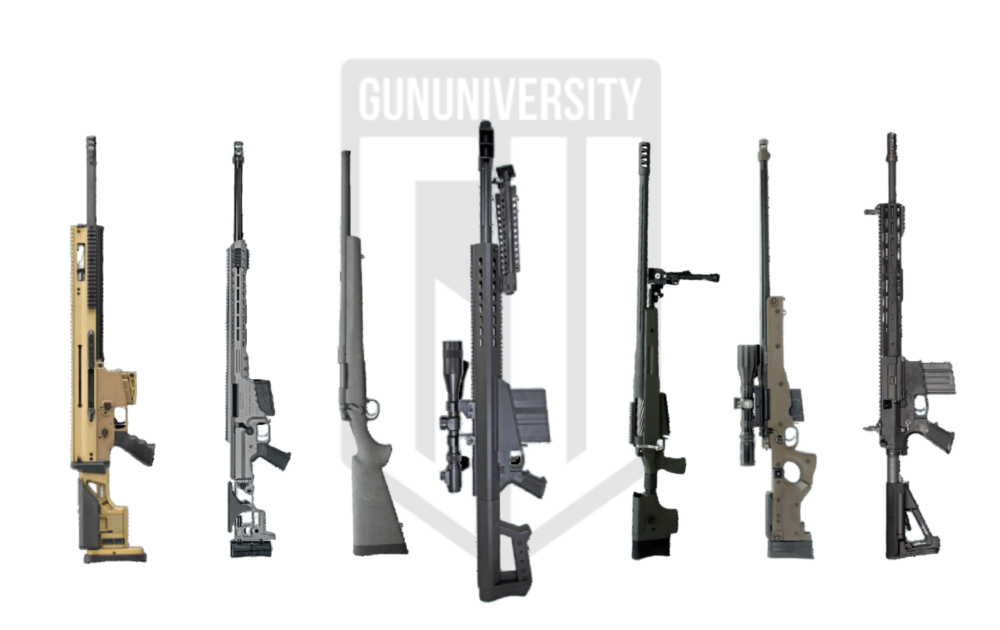
What Exactly is a Sniper Rifle?
Most people think they know what a sniper rifle is… or at least they have a picture in their head. But just throwing a scope on a rifle doesn’t suddenly make it a sniper rifle.
Accuracy is obviously a big part of it. But that’s not the whole story. There are plenty of rifles out there that are extremely accurate and built for competition, but they wouldn’t hold up very well in a real-world tactical environment.
A sniper rifle has to be more than just accurate. It has to be usable. That usually means something that’s still fairly lightweight or at least manageable, and something that can be run effectively in different situations. It also needs to be set up for optics, and these days that usually includes compatibility with things like night vision.
Accuracy still matters, and so does effective range. A sniper rifle should be able to reach out and hit what you’re aiming at without a lot of trouble. To do that, you typically need a full-powered rifle cartridge at a minimum. A lot of modern setups are moving toward larger, more capable cartridges to extend range and handle tougher targets.
How I Chose the Best Sniper Rifle
I’ve been shooting for a long time, including my time in the Marine Corps, so I’ve had the chance to get behind a lot of different rifles that would fall into the “sniper rifle” category. Some I’ve owned, some I’ve borrowed, and some I’ve reviewed over the years.
For this list, I wasn’t interested in what just looks good online. I wanted rifles that actually perform. Things like how they shoot, how reliable they are, how they feel in the hands, and whether they’re worth the money all mattered to me.
I also checked in with a few buddies of mine who shoot a lot and know their stuff. I wanted to hear what they’ve been running lately, what’s held up, and what hasn’t. It’s easy to get tunnel vision if you only look at your own experience, so I like getting other perspectives when I can.
Even though I’ve ranked these from 1 to 7, I didn’t want this to be a “there’s only one right answer” kind of list. There’s a mix of rifles here for different budgets and different uses. What works great for one person might not be the right fit for someone else.
At the end of the day, this stuff is pretty personal. The best thing you can do is use this as a starting point, get behind a few rifles if you can, and figure out what actually feels right to you.
Best Sniper Rifles
- Barrett MRAD
- Knight’s SR-25
- Accuracy International L96A1/AW
- Remington 700 Tactical
- Barrett M82
- McMillan TAC-50
- SCAR 20S / MK 20 SSR
Best Sniper Rifles
 |
| See Price | |
 |
| See Price | |
 |
| See Availability | |
 |
| See Price | |
 |
| See Price | |
 |
| See Price | |
7. SCAR 20S |  |
| See Price |
Best Sniper Rifles: Reviews
So how do you actually decide what the “best” sniper rifles are?
Rifles have been around for a long time. You could go all the way back to the Civil War and start building a list from there, and it would get out of hand pretty quickly. There’s a ton of history here.
That’s not what I’m trying to do, though.
For this list, I’m sticking with modern rifles. The ones that are still being made, still being used, and actually make sense if you’re looking at something today. There are some older rifles I really like, and I’ll be honest, a few of them are still pretty great. They just don’t fit what I’m trying to cover here.
So you won’t see something like the M1D on this list… even though, yeah, it’s pretty sweet.
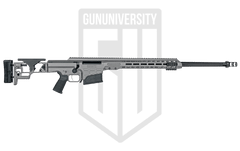
1. Barrett MRAD
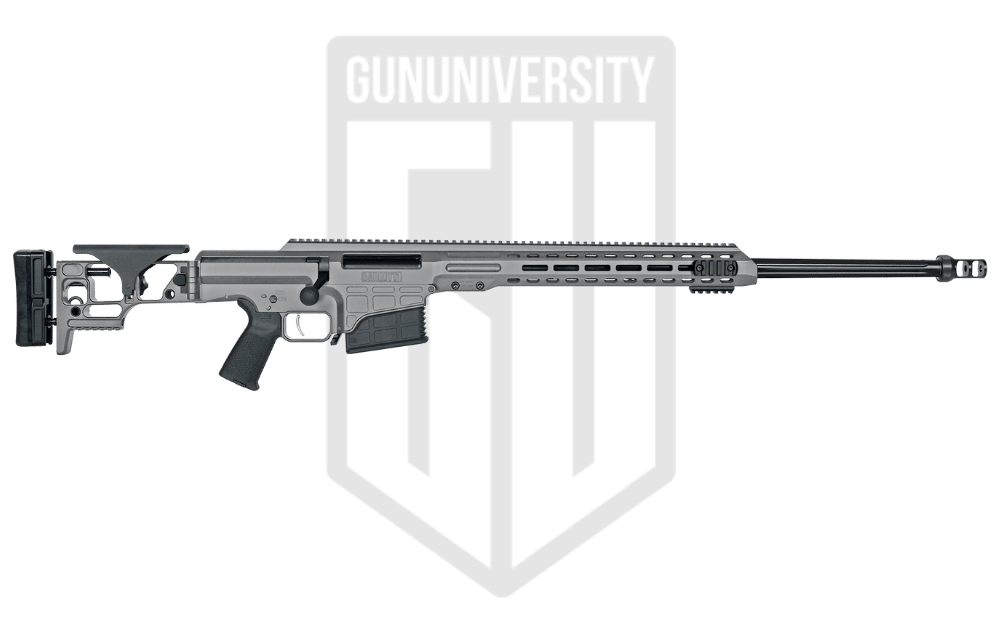
Barrett MRAD
The MRAD, or Multi-role Adaptive Design, originally came to be due to the SOCOM Precision Sniper Rifle program. Barretts has always been up for producing something innovative, capable, and accurate and sniper rifles are their bread and butter.
- Shootability B+
- Reliability A+
- Ergonomics A+
- Accuracy A
- Value A+
Our Grade
A
Reader’s Grade
B+
Based on 29 Reviews
Your Grade
Do You Own This Gun? Leave A Review
Success Your Grade Has Been
Added To Our Reader’s Score
We use email to verify the accuracy of our reviews. We promise to never spam you.
Barrett MRAD Specs
- Calibers Various
- Action Bolt Action
- Effective Firing Range 1,600 Yards
- Notable Users US Army, US Marine Corps, SOCOM
Barrett MRAD Review
The Barrett MRAD struck gold with both the United States Army and Marine Corps. The MRAD, or Multi-role Adaptive Design, originally came to be due to the SOCOM Precision Sniper Rifle program. Barretts has always been up for producing something innovative, capable, and accurate and sniper rifles are their bread and butter.
The MRAD’s got a lot of claims to fame, but the main feature that drew the gun so much attention is the ability to easily swap calibers. Users can swap calibers by removing two Torx screws, changing the bolt face, and possibly a magazine change. Each barrel has a factory headspaced bolt face that covers a major problem with quick caliber conversions.
For the Marine Corps and Army, the ability to swap between 338 Lapua Magnum, .300 Winchester magnum, and the classic 7.62 NATO makes the MRAD missionally and logistically adaptable. Snipers will be armed with a single rifle that could be used in a multitude of missions around the world.
The MRAD uses a bolt action rifle design paired with an extremely modern chassis system. This accommodates a wide variety of optics, including thermal and night vision clip-ons that sit in front of your traditional rifle optic. Users can outfit an MRAD with every possible gizmo and gadget to make it a modern tactical sniper rifle. From high-powered IR lasers to simple bipods, the MRAD can accept it all.
On the opposite side, the user-adjustable stock allows for maximum comfort and compatibility with various shooter sizes. An adjustable cheek rest allows the user to choose between different height mounts and different optic types.
You can read the full review of the Barrett MRAD here.
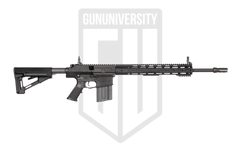
2. Knights SR-25
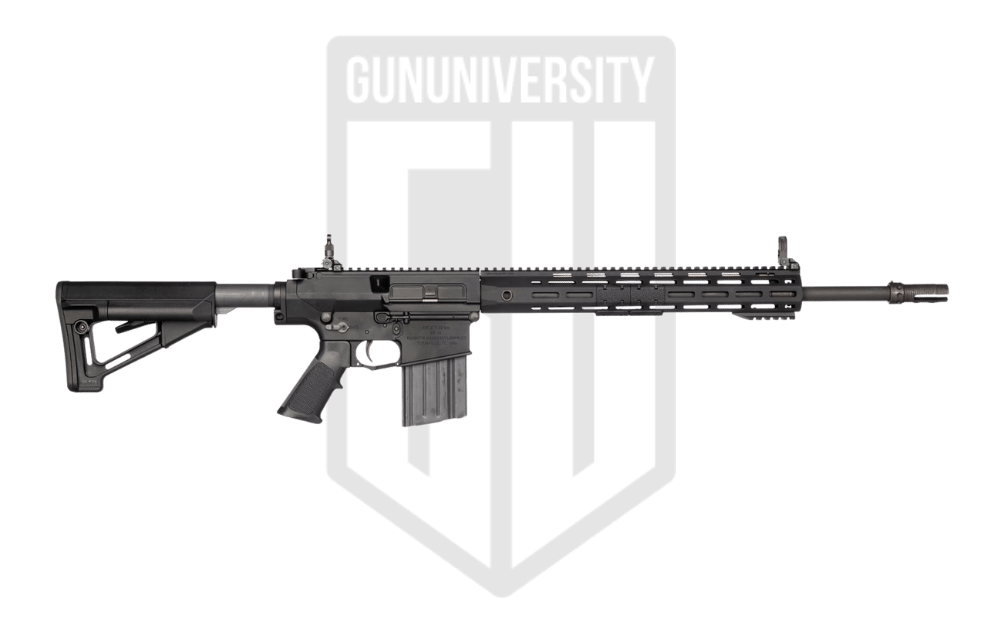
Knights SR-25
Knight’s Armory is a legendary company that’s provided some of our top-tier warfighters with the best weapons on the market.
- Shootability A-
- Reliability A-
- Ergonomics A
- Accuracy A
- Value A-
Our Grade
A-
Reader’s Grade
C
Based on 8 Reviews
Your Grade
Do You Own This Gun? Leave A Review
Success Your Grade Has Been
Added To Our Reader’s Score
We use email to verify the accuracy of our reviews. We promise to never spam you.
Knight’s SR-25
- Calibers 7.62 NATO and 6.5 Creedmoor
- Action Semi-Auto
- Effective Firing Range 875 yards
- Notable Users U.S. Army, Marine Corps, SOCOM
Knight’s SR-25 Review
Knight’s Armory is a legendary company that’s provided some of our top-tier warfighters with the best weapons on the market. They’ve long offered Special Operations forces weapons, and suppressors, and most of the military systems utilize their rail designs. The SR-25 took the AR-10 style platform to new heights.
Eugene Stoner himself worked with Knight’s Armory to perfect the 7.62 NATO AR, and thus the Stoner Rifle was born. Since then, this gas-operated, semi-automatic, direct impingement rifle has served some of the most elite forces in the world. The SR-25 came to be at a time when the bolt action sniper rifle ruled and was one of the first semi-auto sniper rifles to prove its merit.
As warfighting evolved, the SR-25 followed suit. It became known as the Mk11 by SOCOM and the U.S. Navy and Marine Corps. The Mk11 served until 2017 with a number of sniper forces and proved its mettle in the Global War on Terror. I’ve been personally supported by a Scout Sniper team carrying the Mk11 Mod 0 in Afghanistan and felt quite safe.
The Mk11 Mod 0 faded away, but the M110 SASS was born and used the SR-25 as its base rifle. The Marine Corps loved the Mk11 so much that they’d only replace it with a one-for-one swap for M110 SASS rifles. The M110 uses a URX rail, a stock with an adjustable LOP, a flash hider with suppressor QD, and a one-piece 30mm scope mount.
The SR-25 retains the modularity of the Armalite rifles and has and will continue to be used as a semi-auto sniper rifle in various configurations around the world.

L96A1/AW Specs
- Calibers 7.62 NATO, 338 Lapua, 300 Winchester Magnum
- Action Bolt
- Effective Firing Range 800 to 1750 yards
- Notable Users British Armed Forces, Australian Defense Force
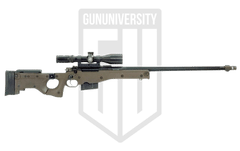
Accuracy International L96A1/AW Review
Accuracy International is the James Bond of sniper rifle companies. I don’t mean that just because they’re British either. They produce highly refined rifles at a high cost, but you can rightly expect significant performance out of the weapon as well. The L96A1 Arctic Warfare model might be one of the more legendary and well-known sniper rifles with a long history of service with the British Military and across Europe.
The AI L96A1 rifles utilize a proven and time-tested bolt action and come in 7.62 NATO, 300 Winchester Magnum, and .338 Lapua magnum. Accuracy wise the rifle guarantees a .5 MOA group at 100 yards, making it absurdly accurate. Unlike many sniper rifles, the AI L96A1 design was not an accurized sporting rifle but a built from the ground up sniper rifle.
The chief benefit is accuracy and a rugged design. Additionally, the rifle is modular and flexible, and caliber conversions are possible with minimal hassle to an armorer. Also, the use of a chassis system rather than a polymer or wood stock helps make the Accuracy International rifle a mainstay among snipers.
In fact, it’s such a successful design that other companies use AI chassis on other rifles. For example, the Mk13 uses a Remington 700 action but an Accuracy International chassis. The Arctic Warfare model improved reliability in cold conditions. They used de-icing features to allow the rifle to reliably work in -40 degree temperatures.
On top of that, they increased the size of the controls and functions to be easily used with gloves. The Arctic Warfare model has become the stock standard name for the famed Accuracy International rifle.
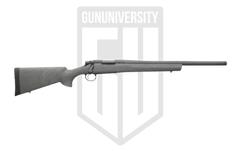
4. Remington 700 Tactical
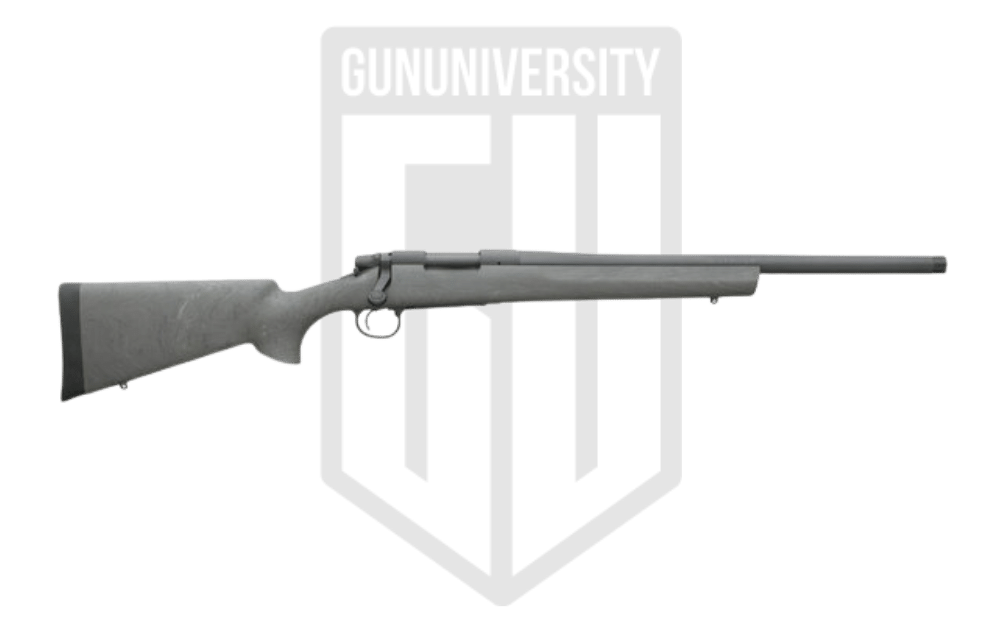
Remington 700 Tactical
The Remington 700 went on to become the M24, the M40, the M2010, and the Mk13 sniper rifle systems.
- Shootability A
- Reliability A+
- Ergonomics A
- Accuracy A
- Value A-
Our Grade
A
Reader’s Grade
A
Based on 19 Reviews
Your Grade
Do You Own This Gun? Leave A Review
Success Your Grade Has Been
Added To Our Reader’s Score
We use email to verify the accuracy of our reviews. We promise to never spam you.
Remington 700 Tactical Specs
- Calibers 7.62 NATO, 300 Winchester Magnum, Numerous others
- Action Bolt
- Effective Firing Range 800 to 1300 yards
- Notable Users Entire US Armed Forces
Remington 700 Tactical Review
The Remington 700 came to be in 1962, and the initial design was for a sporting rifle. While the rifle started life as a hunting rifle, the accuracy of the rifle quickly caught the eye of numerous burgeoning sniper rifle programs. The Remington 700 went on to become the M24, the M40, the M2010, and the Mk13 sniper weapon system.
I’m certainly missing some overseas variants of the Remington 700 Tactical and likely missing some of the domestic sniper rifle variants. The Remington 700 series are bolt action rifles designed with the idea of producing a rifle that had tight bore and chamber tolerances, and a very fast lock time. At the same time, the rifle needed to be capable of being easily mass-produced.
Thus the Remington 700 was born. The Remington 700 provided snipers with a lightweight but extremely accurate rifle. Accuracy on top of simplicity and capability became the strength of the Remington 700, and both short and long action models have seen military service. The Marine Corps uses the M40A7 in 7.62 NATO, as well as the Mk13 Mod 7 in .300 Winchester Magnum.
The Army labeled their Remington 700 the M24, which evolved from a simple 7.62 NATO bolt gun to the chassis enhanced M2010 sniper rifle in .300 Winchester Magnum. Remington 700 rifles have been used by numerous police snipers and forces, including LAPD and NYPD SWAT teams.
While the Remington 700 might be showing its age, the weapon perseveres and adapts as necessary for the next mission set.
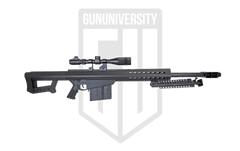
5. Barrett M82
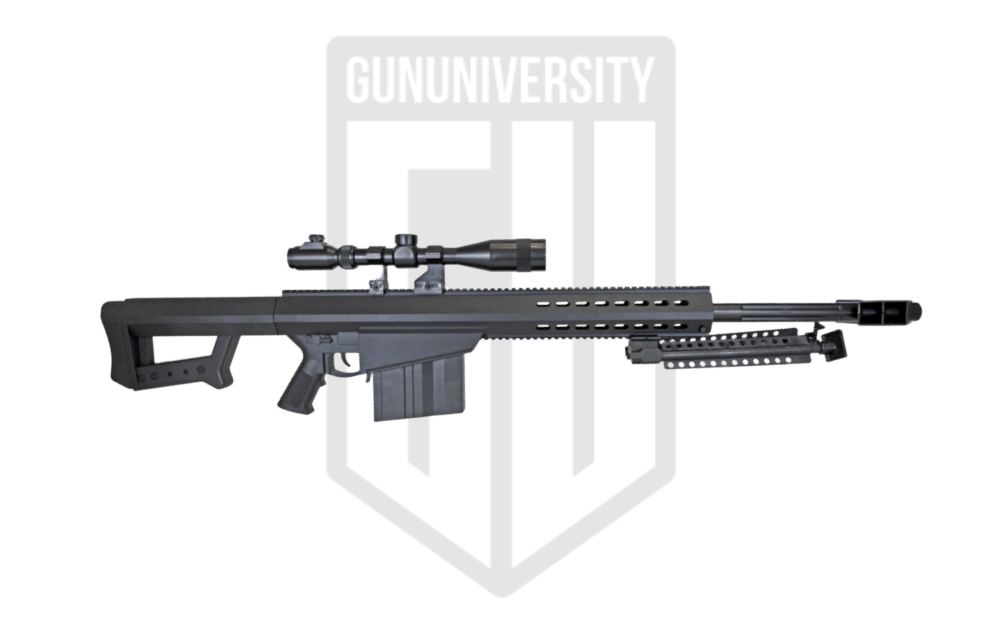
Barrett M82
The M82 offers snipers an anti-material rifle with extremely long-range capabilities. It’s less for personnel engagement and better suited for efficient penetration of material targets.
- Shootability A+
- Reliability A-
- Ergonomics A
- Accuracy A+
- Value A
Our Grade
A
Reader’s Grade
B+
Based on 10 Reviews
Your Grade
Do You Own This Gun? Leave A Review
Success Your Grade Has Been
Added To Our Reader’s Score
We use email to verify the accuracy of our reviews. We promise to never spam you.
Barrett M82 Specs
- Calibers 50 BMG
- Action Semi-automatic
- Effective Firing Range 2,000 yards
- Notable Users United States Military, French GIGN, Canadian JTF2
Barrett M82 Review
A 50 BMG shoulder-fired rifle seems near impossible, but Barrett found a way to make it work. Not only did it work, but it worked well enough to become the M107 sniper rifle. Barrett utilized a semi-automatic action that used recoil operation. The barrel moves rearward with the bolt for a short period before stopping and being returned forward by a set of large springs.
This use of a short recoil design with a massive muzzle device makes the Barrett series surprisingly manageable recoil-wise. I’d place it up there with a 12 gauge shotgun. As you’d imagine, the weapon is massive and quite heavy. The standard M82 utilizes a 20-inch barrel and has an overall length of 48 inches. The rifle tops the scales at 29.7 pounds.
It’s roughly the same size and weight as a medium machine gun. The weight and length require the user to use the weapon in a supported position. Barrett includes a folding bipod to aid in supported shooting and a carry handle for administrative movements.
The M82 offers snipers an anti-material rifle with extremely long-range capabilities. It’s less for personnel engagement and better suited for efficient penetration of material targets.
The M82 and its 50 BMG round can stop cars, trucks, and even lightly armored vehicles, destroy equipment, and pierce through the cover. Explosive Ordnance Disposal teams even use the M82 to destroy explosive devices and detonate the devices from a distance.
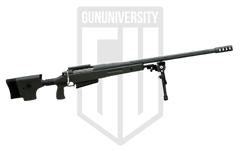
6. McMillan TAC-50
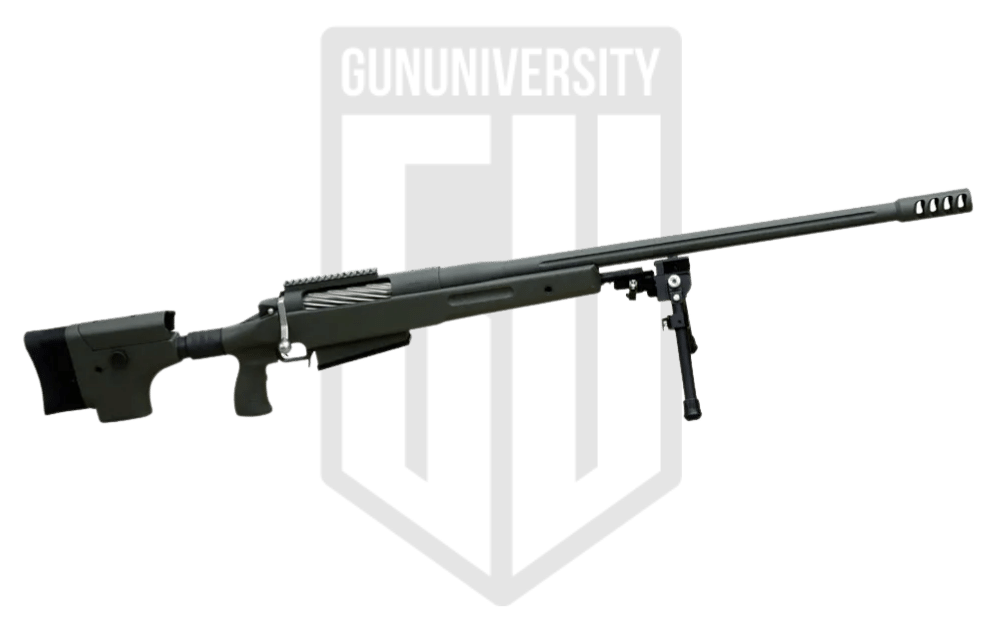
McMillan TAC-50
The TAC-50 uses a bolt design, and it’s considered a precision anti-material rifle. The finely tuned bolt action design squeezes the most accuracy possible out of a round designed for machine guns.
- Shootability A-
- Reliability A
- Ergonomics A-
- Accuracy A-
- Value B+
Our Grade
A-
Reader’s Grade
B+
Based on 4 Reviews
Your Grade
Do You Own This Gun? Leave A Review
Success Your Grade Has Been
Added To Our Reader’s Score
We use email to verify the accuracy of our reviews. We promise to never spam you.
McMillan TAC-50 Specs
- Calibers 50 BMG
- Action Bolt
- Effective Firing Range 2,000 Yards
- Notable Users JTF2, US Navy SEALs
McMillan TAC-50 Review
How could you make a list of the world’s best sniper rifles without including the rifle used to make the longest kill shot in history? Canadian commandos with the elite JTF2 utilized the McMillan TAC 50 to kill a member of ISIS at 3,540 meters, which equates to 2.2 miles in freedom units. JTF2 isn’t the only elite force using the TAC-50. Snipers with the SEAL teams utilize the TAC-50 as the Mk 15.
The TAC-50’s bolt-action design is a hallmark of precision rifles, and it’s considered a precision anti-material rifle. The finely tuned bolt action design squeezes the most accuracy possible out of a round designed for machine guns. It’s exceptionally accurate and does typically outperform the Barrett M82 in that department.
Weight-wise it’s still a beast at 26 pounds but does feature a long 29-inch barrel. That barrel is a match-grade design that’s made by renowned barrel company, Lija to precise standards. The barrel features fluting to decrease weight and improve cooling capabilities. In the end, we have a familiar booking and massive muzzle brake that certainly cuts down the recoil.
The TAC-50 comes with a fiberglass stock and a folding bipod. The stock can be adjusted for length and even removed for transport purposes. It’s a mighty rifle that will help you send several hundred grains of lead downrange in a very accurate manner.
7. SCAR 20S

SCAR 20S
FN’s SCAR series of rifles have seen numerous configurations and designs to make the platform an all-in-one choice for special operations personnel. The SCAR 20S is the civilian variant of what’s now designated the MK 20 SSR. The MK 20 SSR.
- Shootability A
- Reliability A
- Ergonomics A
- Accuracy A-
- Value A
Our Grade
A
Reader’s Grade
C+
Based on 5 Reviews
Your Grade
Do You Own This Gun? Leave A Review
Success Your Grade Has Been
Added To Our Reader’s Score
We use email to verify the accuracy of our reviews. We promise to never spam you.
SCAR 20S / MK 20 SSR Specs
- Calibers 7.62 NATO / 6.5 Creedmoor
- Action Semi-Auto
- Effective Firing Range 800 Yards
- Notable Users US Navy SEALs, SOCOM
SCAR 20S / MK 20 SSR Review
FN’s SCAR series of rifles have seen numerous configurations and designs to make the platform an all-in-one choice for special operations personnel. The SCAR 20S is the civilian variant of what’s now designated the MK 20 SSR. The MK 20 SSR, or sniper support weapon, is a semi-auto, short-stroke gas piston rifle that utilizes America’s favorite .30 caliber fighting round the 7.62 NATO. For civilian shooters, the 6.5 Creedmoor is also an option.
FN’s SCAR series were plenty accurate, but they took it a step further with the SSR and ensured it provided top-flight accuracy for a semi-auto rifle. The 20S series SCAR offers a full-length monolithic upper receiver that allows snipers to mount a wide variety of optics. This includes day and night optics, laser aiming devices, and more.
The 20S uses a 20-inch barrel that makes good use of the 7.62 NATO round. FN lengthened the receiver to better support the barrel and ensure snipers could accessorize the weapon as necessary. The stock is fixed but highly adjustable in the length of the pull and cheek weld department.
The MK 20 SSR doesn’t provide the longest range capabilities but does offer accurate, rapid-fire capabilities for close to moderate range precision. Luckily, FN released a civilian variant of the weapon that matches the Military’s model.
Best Sniper Rifle: Buyer’s Guide
The reviews can help narrow things down, but picking a sniper rifle really comes down to what you need and what you like. There’s no single rifle that’s perfect for everyone.
There are a lot of factors that go into it, so before you settle on anything, it’s worth thinking through what actually matters for your setup. Here are a few things I pay attention to when I’m choosing a rifle like this.
Factors To Consider When Buying a Sniper Rifle
Define Your Purpose:
The first thing I always ask is simple… what are you actually trying to do with the rifle? Hunting, long-range shooting, training, or something more professional? That answer matters a lot, because it changes what you should be looking for. A rifle that works great for one role might not make much sense for another.
Consider Caliber:
Caliber is a big decision, and it really comes down to distance and what you’re shooting at. Something like .308 Winchester is a solid, all-around option and works well for a lot of people. Once you start pushing further out, cartridges like .338 Lapua start to make more sense. Just keep in mind, as you go up in power, you’re also dealing with more recoil, more cost, and usually more weight.
Action Type:
You’ll usually be choosing between bolt-action and semi-auto. Bolt guns are known for being precise and very reliable, which is why they’re so common in this space. Semi-autos give you faster follow-up shots, which can be useful depending on how you shoot, but they don’t always match the same level of precision. It really depends on what you want out of the rifle.
Accuracy:
This one seems obvious, but it’s still worth paying attention to. Not every rifle that looks good on paper actually shoots the way you expect. I always look at real-world feedback, not just specs. Things like barrel quality, the trigger, and how well the rifle is put together all play a role here.
Build Quality and Durability:
If you’re spending this kind of money, you want something that’s going to hold up. A well-built rifle should be able to handle different conditions without issues. I tend to stick with manufacturers that have a solid reputation, and I pay attention to materials and overall construction.
Ergonomics:
If a rifle doesn’t feel right, you’re going to notice it pretty quickly. Balance, weight, recoil… all of that matters once you start shooting. Adjustable stocks, a good grip, and a setup that fits you can make a big difference over time.
Customization Options:
Most people don’t leave their rifle completely stock. You’ll probably end up adding or changing something. So it helps if the rifle is easy to work with. Things like rails, adjustable components, and overall compatibility can make it easier to set it up the way you want.
Budget:
It’s easy to go down the rabbit hole here. There are some very expensive rifles out there. But there are also options that perform really well without going all the way to the top end. Think about what you actually need, and don’t forget you’ll likely be spending money on optics, ammo, and other gear too.
Test Before Buying:
If you get the chance, try before you buy. That’s always my preference. Reading about a rifle only gets you so far. Actually shooting it tells you a lot more. Things like trigger feel, recoil, and how it handles are hard to judge until you’ve spent some time behind it.
Best Sniper Rifles: FAQs
It depends on a few things… the caliber, the ammo, and honestly the person behind the rifle. A good setup in the right hands can stretch pretty far. In general, most modern precision rifles are comfortable from a few hundred yards out to 1,000 yards and beyond. But that doesn’t mean everyone is hitting those distances consistently. Past a certain point, it becomes more about skill than the rifle itself.
There’s no single “best” caliber… it really comes down to what you’re trying to do. The .308 is still a solid option and pretty forgiving. 6.5 Creedmoor is popular because it shoots flat and has less recoil, which makes it easier to stay on target. If you start pushing into really long distances, cartridges like .300 Win Mag or .338 Lapua start to make more sense. Each one has trade-offs. More power usually means more recoil and more cost. So it’s about finding the balance that works for you.
Yeah, and most people do. It’s pretty rare to leave a rifle completely stock. Things like adjustable stocks, rails, optics, bipods… all of that lets you set the rifle up the way you want. The goal is to make it fit you and how you shoot, not the other way around.
Sometimes. It depends on the caliber. Some rifles use very common rounds like .308 or 7.62 NATO, which are easy to find. Others are built around more specialized cartridges. In those cases, you’ll want ammo that’s matched to the rifle and what you’re trying to do with it. When you start caring about precision, the exact ammo you use matters more than people think.
In many places, including the United States, yes… but there are still laws you have to follow. What’s allowed can vary depending on where you live, so it’s always worth checking your local and state regulations before you buy anything.
Sniper Rifles Rule
Most military rifles you see aren’t something the average person can just go out and buy. That’s just the reality. But when it comes to precision rifles, things are a lot more accessible.
Most of what people would call a “sniper rifle” is either a bolt-action or a semi-auto, and those are something a lot of shooters can own or even build out over time. You can start with a solid rifle, add good glass, and slowly turn it into exactly what you want.
And there’s just something fun about a rifle that treats 1,000 yards like a starting point. It’s a different kind of shooting, and once you get into it, it’s easy to see the appeal.
Curious what other people are running… what’s your go-to setup?
About Travis Pike

Travis Pike is a former Marine Machine Gunner and a lifelong firearms enthusiast. Now that his days of working a 240B like Charlie Parker on the sax are over, he's a regular guy who likes to shoot, write, and find ways to combine the two. He is a "simplicisist" when it comes to talking about himself in the 3rd person and a self-professed tactical hipster. Hit him up on Instagram with story ideas.
Recent Posts

March 7, 2026
March 7, 2026

March 7, 2026
Happy 4th of July, I hope your guys are having a great weekend.
Just a quick comment. I understand that this is a little after the fact and probably doesn’t really matter but….
The USMC uses the M40A6. There is no A7, A6 is the latest variant. Also the Mk13 mod 7 is not a REM 700 based system. It uses a Stiller action. The older mod 5 version was a 700 but the mod 7 is not.
Have a great day
A great many people know the very thing an expert rifleman rifle is, or possibly figure they do. Throwing an extension on a weapon doesn’t make it an expert sharpshooter rifle. Exactness is a not kidding thought, clearly, however in addition, the firearm should be fit and valuable in strategic applications. A lot of exceptionally precise rifles are fabricated only for contest and wouldn’t keep going long in a conflict torn country.
These necessities regularly require the rifle to be lightweight or simple to move with. It ought to be a checked rifle, and in the cutting edge age, this implies similarity with current night vision gadgets. Precision is significant, as is viable reach.
Expert rifleman rifles ought to connect with an objective easily. This requires a full-controlled bullet at the very least. Most present day sharpshooter rifles are pushing for bigger, more competent cartridges to increment range and to manage current defensive layer dangers