
Best Shotgun Shells for Home Defense
There have been eras where the shotgun has been seen as the perfect home defense weapon, then the worst, then a not-so-bad option. Shotguns are very effective fighting weapons in close-range environments. Home defense, for most of us, is a close-range environment. Combine the two, and you will get a very simple weapon that can be had at a very affordable price.
One of the most important considerations you’ll have to make is ammo. When it comes to shotguns, it’s not as simple as finding the right jacketed hollow point and calling it a day. We want to be picky and peculiar and willing to test the ammo to make sure it’s the right choice for our shotgun. To help you find the right load, you can profit from my addiction to shotguns.
I shoot shotguns a lot. I test various ammo types just out of curiosity. I’ve finally found a way to spread my experience and knowledge to you, the reader.
What Makes a Good Shotgun Load?
For a home defense load, we are specifically looking for several features. Let’s break those down.
Buckshot – For defensive use, we want buckshot. Specifically, we want a buckshot capable of penetrating at least 12 inches through ballistic gel. The minimum size buckshot that achieves this is No. 1. We want to stay away from anything smaller than that.
Tight Patterning – For home defense purposes, you want a pattern that tends to be tighter. Tighter patterns reduce the risk of errant pellets that could miss the target and strike a loved one.
Low Recoil – Shotguns are not the most pleasant recoiling guns. For that reason, you want a reduced recoil load to improve control and offer faster follow-up shots.
Sized Right – It seems pretty simple that 2.75 inches is 2.75 inches, right? Well, shotgun shells are measured after they are fired, which means the crimp is undone. Unfired shells can vary in length depending on the crimp. Shorter is better, and shorter ensures your seven-round tube can hold seven rounds.
With that in mind, let’s talk about my favorite home defense shotgun loads.
The Best Shotgun Shells for Home Defense
- Federal LE FliteControl
- Federal Premium No. 1 Buckshot
- Hornady American Gunner 00 Reduced Recoil
- Hornady Critical Defense
- Fiocchi Defense Dynamics
- Monarch No.1
- Remington Ultimate Defense .410
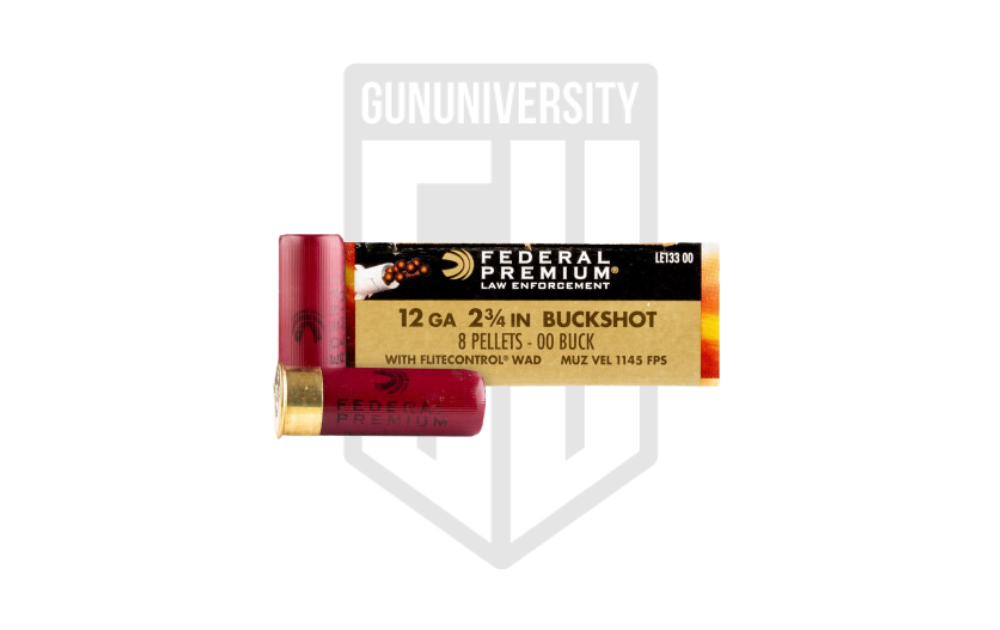
Federal LE 2 ¾ inch 00 8 Pellet FliteControl LE133
My all-time favorite defensive buckshot load is without a doubt Federal Flitecontrol, reduced-recoil eight-pellet 00 buckshot. This combination makes for the tightest patterning load on the market with easy-to-control recoil and consistent, predictable patterns. I absolutely adore this round and keep a couple of sleeves of it on hand at all times, just in case it disappears for some reason.
Each part of the round’s descriptor is important. The Flitecontrol wad is some kind of black magic. It encompasses the entire load of buckshot and does not separate from that load of buckshot until the wad and shot leave the barrel. This gives me the tightest patterns I have ever seen.
At 7 yards, it creates a solid hole you’ll mistake for a slug. At ten yards, you might see a couple of pellets separate from the one big hole. At 15 yards, it’s still smaller in length than my trigger finger. Those tight patterns make me feel more comfortable using a shotgun. I know where every pellet is going, and I don’t have to worry about errant pellets missing and hitting something or someone else.
Using eight pellets of copper-plated 00 buckshot prevents pellet deformation, which keeps pellet deformation low and ensures consistent patterns while also making sure the pellets go deep enough to matter.
I like my shoulders enough that I don’t want to beat them up. The 1,145 FPS load ensures my shoulder remains bruise-free. More than that, reduced recoil means faster follow-up shots. How much faster? It’s easy to put two rounds into an ISPC-sized A-zone from a pump-action shotgun in less than a second.
Keep in mind this load is specifically made for a cylinder bore barrel. Adding a choke will keep the wad from performing as intended and make the pattern wider than it should be. Federal FliteControl is worth every penny. It’s not the cheapest load, but its performance makes it an investment as far as I’m concerned.
The Federal Flitecontrol rounds offer the tightest pattern possible with low recoil, excellent reliability, and premium components. If I could only have one option for shotgun ammo, it would be Federal LE133.
Federal Premium No. 1 Buckshot
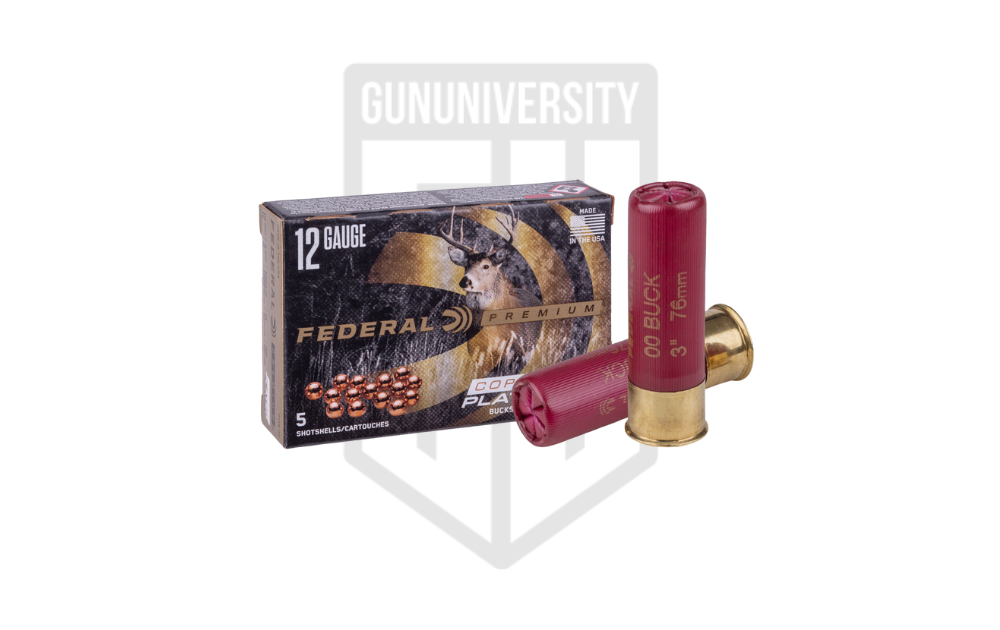
When we talk about buckshot, we aren’t talking about one projectile size. Buckshot comes in various sizes, and the smaller the pellets, the more you can get in your shotgun shell. The smallest acceptable buckshot that consistently meets the FBI’s penetration requirements is Number 1 Buckshot. Number 1 has fallen out of favor, but by trigger pull No. 1 is the most efficient shotgun shell.
While most 2.75-inch defensive buckshot shells hold nine pellets at most, the Federal 2.75-inch No. 1 load holds 16 pellets. The size difference between pellets is .03. That’s not a big jump in pellet size, but it’s a big jump in the amount of pellets you’re launching. The Federal No. 1 buckshot is designed for hunting but works quite well for defensive purposes.
The patterns remain quite tight and consistent. At home defense ranges, there is little risk of an errant pellet. The copper-plated pellets resist deformation and help improve the overall pattern. Additionally, the smaller pellets tend to penetrate through less drywall material than 00 buckshot.
With a velocity of 1,325 feet per second, it sits between low recoil and full-powered loads. It isn’t a shoulder thumper, but you should practice good recoil mitigation techniques. In a semi-auto shotgun, this round tends to be very pleasant to shoot and easy to handle.
Since you have 16 pellets, you get 16 wound tracks. That provides a greater chance of the pellets hitting something vital and ending the fight quickly and efficiently. Most of us use shotguns for their one-shot stop power, and the No. 1 buckshot and its increased payload increases that chance.
Like most Federal Premium loads, the No .1 will run like an absolute champ. It’s reliable, consistent, and capable. The downside will eb that increased recoil. You’re not just dealing with 1,325 feet power second velocity, but having to move more lead with that same velocity.
If you don’t mind the recoil, you’re getting a premium grade, 2.75-inch load, throwing 16 pellets per trigger pull. It’s an excellent example of what a shotgun is capable of.
Hornady American Gunner 00 Reduced Recoil
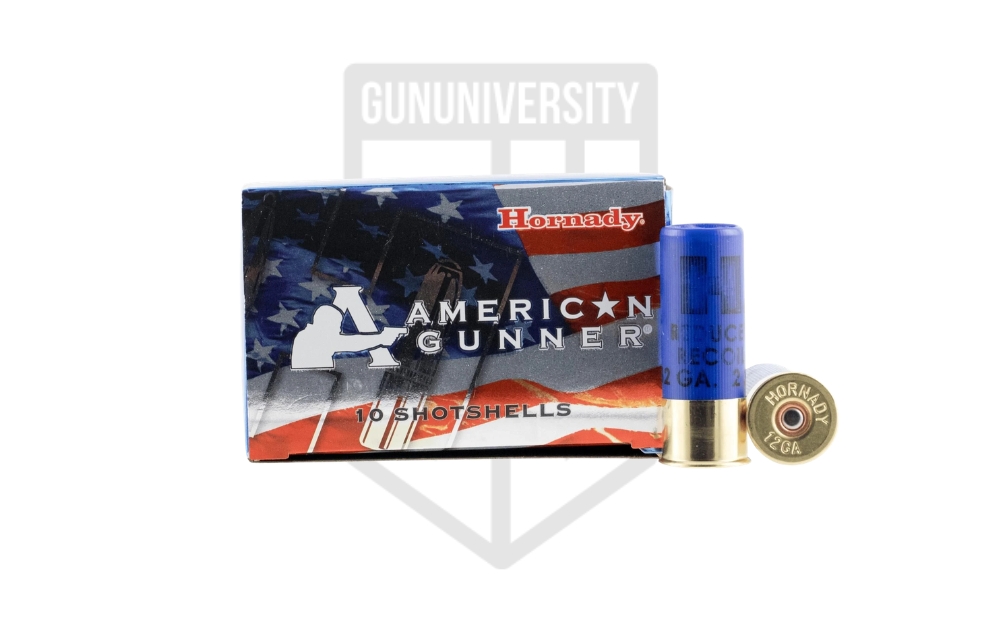
Hornady’s best defensive buckshot load is hidden. It doesn’t fall into the Critical Defense lineup, but in the American Gunner lineup. Hornady frustrates me because they could make a true Flitecontrol competitor with their Versatite wad, but continue to make rounds that are just a step behind in different ways.
The American Gunner 00 reduced recoil buckshot provides a low-recoil option that uses the Versatite wad. The versatite wad acts like the Flitecontrol wad, staying with the shot until it leaves the barrel. This produces tight patterns, but due to Hornady’s frustrating design none of them work as well as Flitecontrol.
The American Gunner load gives us a reduced recoil 00 buckshot moving at 1,350 feet per second. That’s not as low recoiling as I prefer, but will ensure it runs in most semi-auto shotguns, even cheap semi-auto shotguns. It doesn’t thump my shoulder by any means and is manageable and easy to control.
Popping two rounds into a target in less than a second is perfectly doable. I even enjoy shooting this stuff out of a Shockwave and similar type firearm. I can put the rounds right where I want them without the recoil pulling me off target.
The American Gunner 00 buckshot patterns are nice and tight. It doesn’t exceed the size of my palm at 15 yards. That’s perfectly tight for home defense use. I love that they used an eight-pellet design to prevent the ninth pellet flyer common with 00 loads.
What they could do better is buffer and plate the shot. This would help keep the patterns tight by preventing deformation. If they did that, they’d have a true Flitecontrol competitor.
Hornady Critical Defense 12 Gauge 00 Buckshot
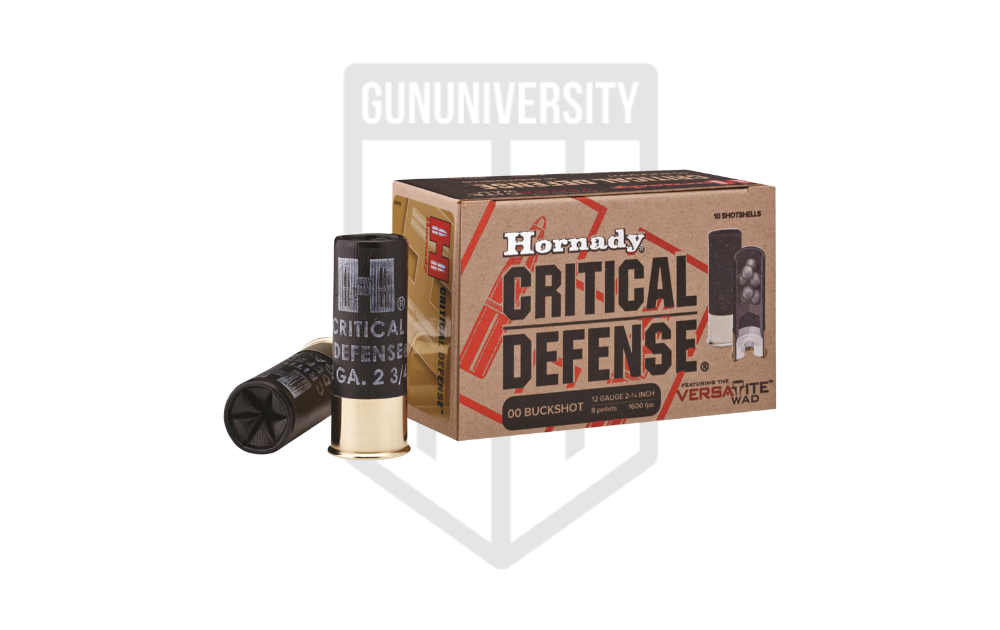
Hornady’s Critical Defense Load and Hornady Black 12 gauge are the exact same load. I’m not exactly sure why they do it this way, but I just know the two rounds are interchangeable. This is a frustrating round to me. It’s an excellent round, but it’s clocked at 1,600 feet per second for some reason. I can’t think of a good reason to have a defensive load at 1,600 feet per second.
The closest excuse I can come up with is that it will work with any semi-auto shotgun, regardless of how picky it is. Still, most modern shotguns are fine, even with reduced recoil loads. The downside of that high level of velocity is recoil. The recoil can be rough. Rough recoil does equal less than stellar follow-up shots.
That’s the frustrating downside up front. The upside is the Versatite wad. It works a lot like the FliteControl wad. In fact, they seem to work identically. The wad wraps the load of shot in a polymer cup, and as it leaves the barrel, it brakes, and the pellets continue on. The good news is that the patterns are very tight. It’s not quite as tight as Flitecontrol, but it’s close.
We’ve learned lately that velocity can affect patterns, which a 1,600 FPS velocity does. It keeps the load from patterning as tight as it possibly can. Luckily, it’s still smaller than your palm at 15 yards. Tight patterns increase pellet accountability and ensure good tight shots on target. Sadly, another step they could have taken was to copper plate the pellets, which would prevent deformation and help tighten up patterns.
I’m complaining a lot, especially about a laid, which is the second-best defensive buckshot on the market. Call me frustrated because I’d love to see some competition to the Fltiecontrol loads. The Versatite Wad does offer the advantage of being able to work with most chokes. Flitecontrol is isolated to cylinder bore designs, but Versatite works with Improved and Modified chokes. However, you should avoid full chokes with the cartridge.
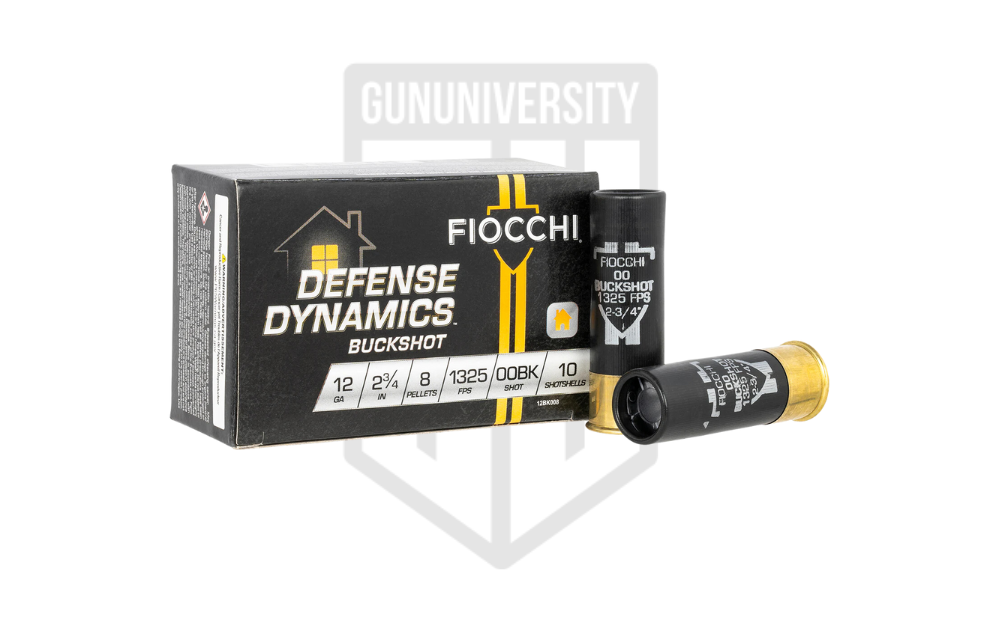
Fiocchi Defense Dynamics 9 Pellet
I call this specific load of Fiocchi Defense Dynamics buckshot Shockwave food. It lists a velocity of 1,250 feet per second and nine pellets. You’d assume that was a 00 load, right? Most nine pellet loads are 00 in the 12-gauge world. That’s where I was wrong. It’s not a 00 load, but a No. 1 load with only nine pellets.
Why this round exists is beyond me, but I’m glad it does. Not only is it affordable, but it’s super soft recoiling. Moving nine No. 1 pellets at 1,250 feet per second results in very low recoil. In fact, it’s basically a 20-gauge load. This results in light, easy-to-handle loads that work well in the short-barreled, firearm-type 12 gauges.
I also like saving money, and these are super affordable buckshot loads. They can often be had for less than 50 cents a round during sales, and at that price, any buckshot is a bargain. This makes them a great training load for defensive shotguns, certainly better than light birdshot.
There isn’t anything fancy to this load. We aren’t getting a plated copper pellet or fancy wads, just good old-fashioned buckshot. The patterns aren’t fantastic, but acceptable from a cylinder bore. This stuff cleans up nicely if you can add an improved choke. This can nearly cut the spread by a 1/3rd from what I’ve seen.
Most gas-operated guns eat this load well, but inertia guns may struggle with its performance. It might be too light for a lot of those inertia driven twelve gauge shotguns. Benelli boys need to keep that in mind.
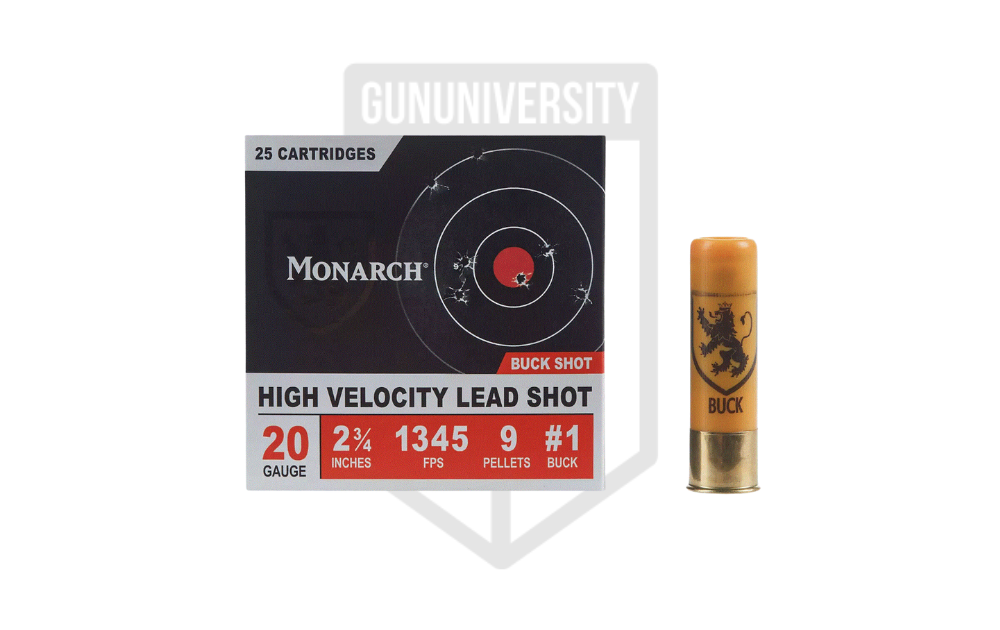
Monarch No.1 9 Pellet
Federal announced a 20-gauge FliteControl at SHOT Show, but I have yet to see it pop up on the market. I reserve the right to swap this entry in the future if the round works. My choice for the best defensive buckshot load is a budget load. Monarch, a brand sold exclusively at Academy, produces an awesome 20-gauge load.
This Monarch load packs nine pellets of No. 1 buckshot. As established, the No. 1 load is the smallest buckshot that consistently penetrates 12 inches through ballistic gel. We get nine pellets of No. 1, which makes this seem like a slightly smaller 12-gauge load.
We get nine pellets of very capable buckshot. The 2.75-inch length of these shells means we get our tubes to full capacity. We don’t get plated buckshot, and we don’t have any fancy magical wads. It’s a very plain load, but it still performs quite nicely. Pattern-wise, we see very acceptable results at home defense ranges. We get an eight-inch pattern at 12 yards, which is a fairly far shot indoors.
We get very light recoil. In one second, I can put two rounds of this Monarch load into an IPSC A-Zone. That’s a lot of lead in very little time, and I’m all about it. The Monarch laid wouldn’t be tough to beat, but the current crop of defensive buckshot seems stuck on No. 2 and No. 3 buckshot loads.
The Monarch load doesn’t dig anything fancy, but it works. It’s also very affordable, and affordability is nice to have. The Monarch buckshot load makes it cheap to stock up on and cheap to train with.
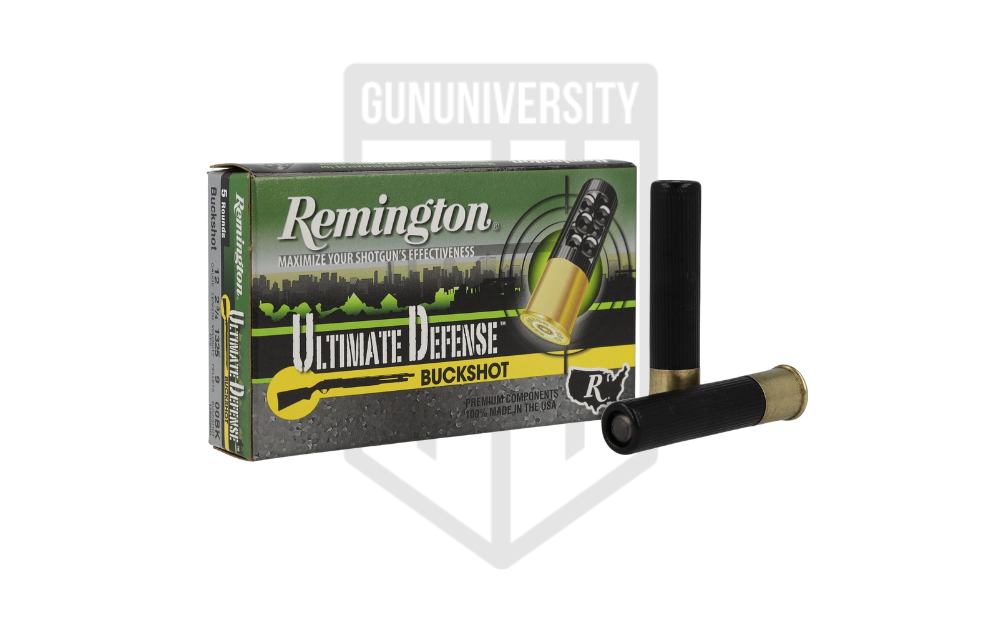
Remington Ultimate Defense .410
If you’re using the wee little .410 for home defense, you might feel a bit underwhelmed by your defensive options. There are a few, but they are often designed for revolvers rather than real shotguns. Luckily, Remington is back! Back and ready to provide one of the best defensive loads the .410 ever saw. The Remington Ultimate Defense load provides shooters with four or five 000 buckshot pellets.
You can’t double stack pellets in a .410, so Remington used the biggest pellets possible. The 000 pellets penetrate deeply and provide nice-sized wound channels. If you can’t use a lot of pellets, you might as well use big pellets. Remington offers the cartridge as both a 3-inch and 2.5-inch cartridge.
The 3-inch gives you one more pellet but decreases your capacity by a single round with most guns. That’ll be a decision you’ll have to make. Personally, the 2.5-inch and the extra round seems more beneficial to me. The 3-inch has nominally more recoil, but not enough to really matter. I do find that the 2.5-inch rounds tend to pattern a bit better than the 3-inch rounds.
The Ultimate Defense shells are very controllable, and you can rip off a string of three from a pump action in less than two seconds. That’s twelve 000 buckshot pellets and should make any threat a lot less threatening. The rounds are reliable and feed well with their high brass design. These are consistent, capable, and easy to shoot.
They aren’t cheap or all that easy to find, so when you find them, stock up!
What You Don’t See
As you cruise through this list, I hope you found the round that will work for home defense. As you’ve likely noticed, every load suggested is a buckshot load. We don’t see the other two major shotgun shell options, birdshot or slugs.
Birdshot is a joke. Unless you’re living in an Alfred Hitchcock movie, birdshot shouldn’t be in your defensive shotgun. It cannot effectively penetrate deep enough to reach the vitals of a threat. I’m not saying it’s not deadly. Any gun and any projectile can be deadly. However, we want consistent penetration for consistent, reliable performance.
Slugs are not a joke. They will penetrate the threat deep and hit hard. However, they might penetrate too much. A big ounce of lead might go right through the threat and will certainly chew through your drywall. They just aren’t the best option for home defense.
Also, you don’t see any mini shells, do you? I think minishells are a fun novelty, but they neuter a shotgun. I use shotguns because I like the payload they fire per trigger pull. Why would I neuter that payload?
That’s not to mention reliability issues. They work perfectly with some guns with adapters, but you’re limited to just Mossberg 500 series guns. No semi-autos function with minishells. I wouldn’t use minishells for defensive use.
I’m not afraid of new, but I prefer proven payloads.
The Shotgun Conundrum
Don’t just take my word for it. Choose some ammo, go to the range, and test the ammo through your gun. Shotguns are weird. Every gun patterns differently. You need to go to the range, shoot the gun at your home defense distance, and observe what happens. Make sure it runs in your guns, and ensure it’s reliable and consistent.
One of the big downsides to shotguns is that they aren’t always plug-and-play. They take some thinking, some effort, and a good bit of training. If you want a plug-and-play weapon, an AR might be better for you. If you want a shotgun, be prepared to do the work.
About Travis Pike

Travis Pike is a former Marine Machine Gunner and a lifelong firearms enthusiast. Now that his days of working a 240B like Charlie Parker on the sax are over, he's a regular guy who likes to shoot, write, and find ways to combine the two. He is a "simplicisist" when it comes to talking about himself in the 3rd person and a self-professed tactical hipster. Hit him up on Instagram with story ideas.
Recent Posts

March 7, 2026
March 7, 2026

March 7, 2026
2 COMMENTS