
Glock 17 vs Springfield Echelon: Veteran vs Rookie
Rereading this article two years after it was first published highlights just how much the market—and my own opinion—has shifted. When I wrote this, the Springfield Armory Echelon was the new kid on the block, and I viewed it with understandable skepticism—just another full-sized, polymer-frame, striker-fired handgun trying to carve out space in a market dominated by the venerable Glock 17. The Glock wasn’t the first, but its success created the mold, and for a long time, it felt like the undisputed king.
Now, my opinion has changed.
While they share fundamental DNA—9mm, polymer, and striker-fired operation—two years of market performance have clearly defined the Echelon not as a mere competitor, but as the new industry standard. Initially, I focused too much on their similarities: duty-sized dimensions, modern capacity, accessory rails, and optics readiness. I was wrong to treat the Echelon as simply crossing the bridge built by Glock.
The Echelon utilized that foundation only to fundamentally improve upon it. Its modular Central Operating Group (COG), superior ergonomics, and the truly innovative Vortex Interface System (VIS) for mounting optics are not just features—they are design advantages that make the Glock 17, reliable as it is, feel archaic and limiting. The Echelon didn’t just meet the modern standard; it set a new one.
Spec Comparison – Glock 17 vs Springfield Echelon
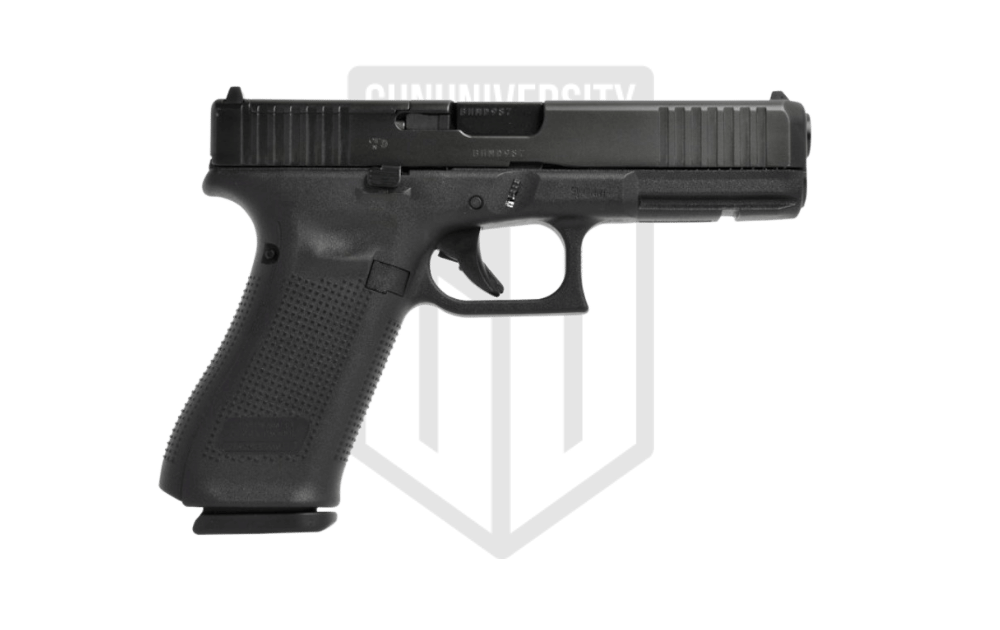
Glock 17 Gen 5 MOS
- Final Grade : A
- MSRP : $745.00
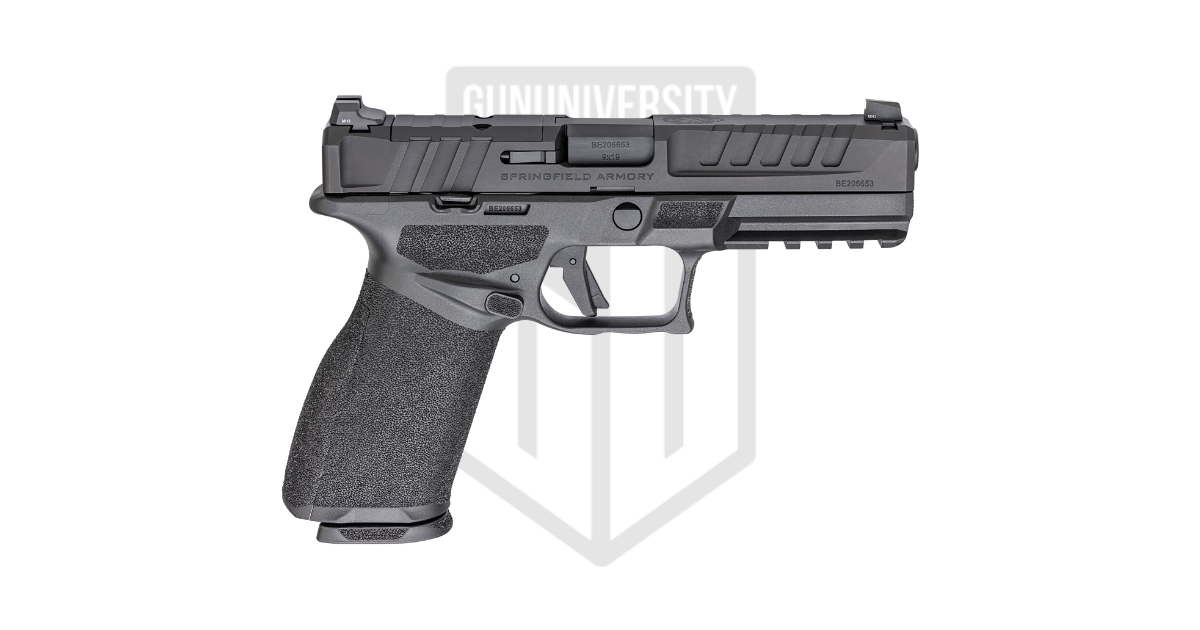
Springfield Echelon
- Final Grade : A+
- MSRP : $719.00
The Glock 17
The Veteran Glock 17 Gen 5 MOS
Glock 17 Gen 5 MOS
Revolutionizing the world since the late ’80s, Glock is a defacto standard across the world for civilians, military, and police.
Gaston Glocks invented his first gun, the Glock 17, to arm the Austrian Army. Gaston had no experience with firearms. However, he was fairly skilled with polymer construction of items and was already supplying the Army with various items. He assembled a team of European firearms enthusiasts and experts, and the Glock 17 was born. Since then, the Glock has gone through five generations of design and has armed countless soldiers, police officers, and citizen defenders.
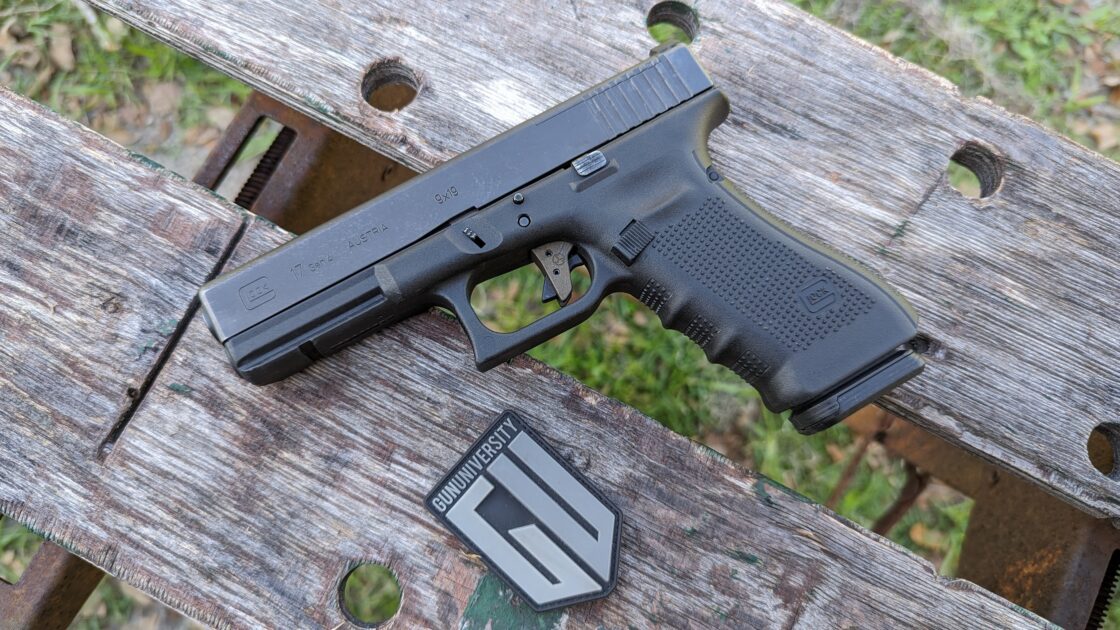
Models and Variations of the Glock 17
The Glock 17 is available in the Gen 3, 4 and 5. Both the Gen 4 and 5 are available with the MOS option. Glock also makes a long slide version of the Glock 17, the Glock 17L. This is not to be confused with the Glock 34. The Glock 17L has a longer barrel than the 34.
-
$620.00
-
$699.99
-
$620.00
-
$700.00
Springfield Echelon
The Rookie Springfield Echelon
Springfield Echelon
Springfield’s new polymer striker fired 9mm pistol with internal chassis
Springfield Armory imports the Echelon from the Croatian company HS Produkt. Springfield Armory and HS Produkt have worked on several firearm projects and have developed many platforms together. The Echelon’s construction came from the minds at HS Produkt, as well as industry experts like Rob Leatham, aka the Great One, to develop the pistol. The Echelon has made a huge splash recently and seems to be the most promising design out of the Springfield Armory catalog.
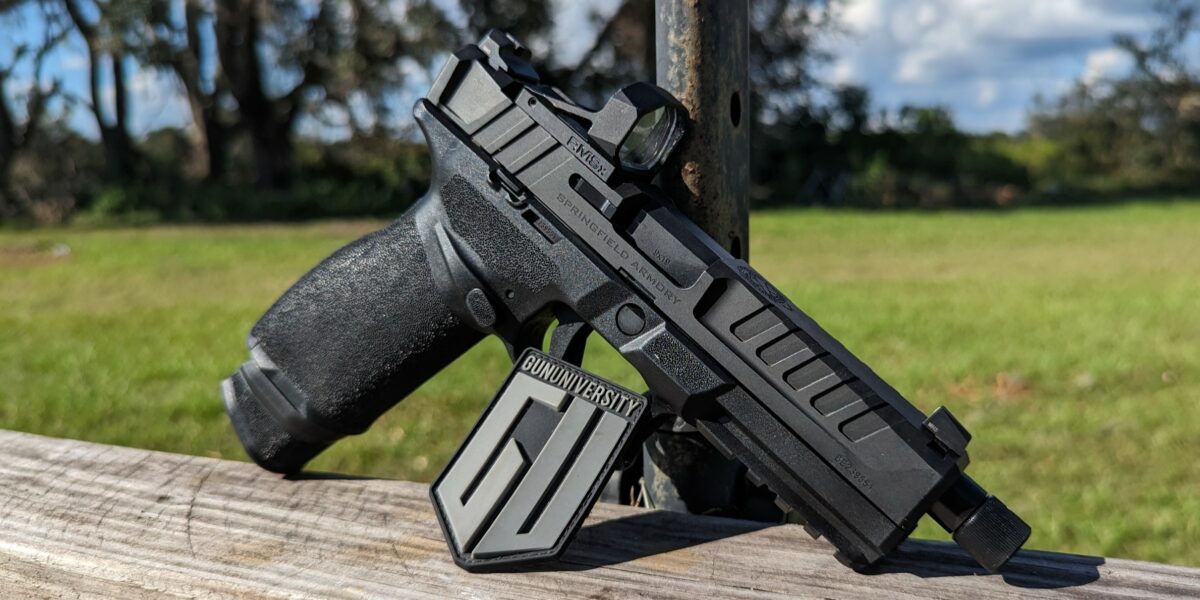
Models and Variations of the Springfield Echelon
The Echelon is available in four different models. They offer the standard Echelon with a U dot sight system along with a low capacity version of this same model. In addition, they offer the Echelon with upgraded 3 Dot tritium sights with a standard barrel and with an extended threaded barrel.
-
$565.99
-
$669.99
-
$629.99
-
$597.99
Glock 17 vs. Springfield Echelon Comparison
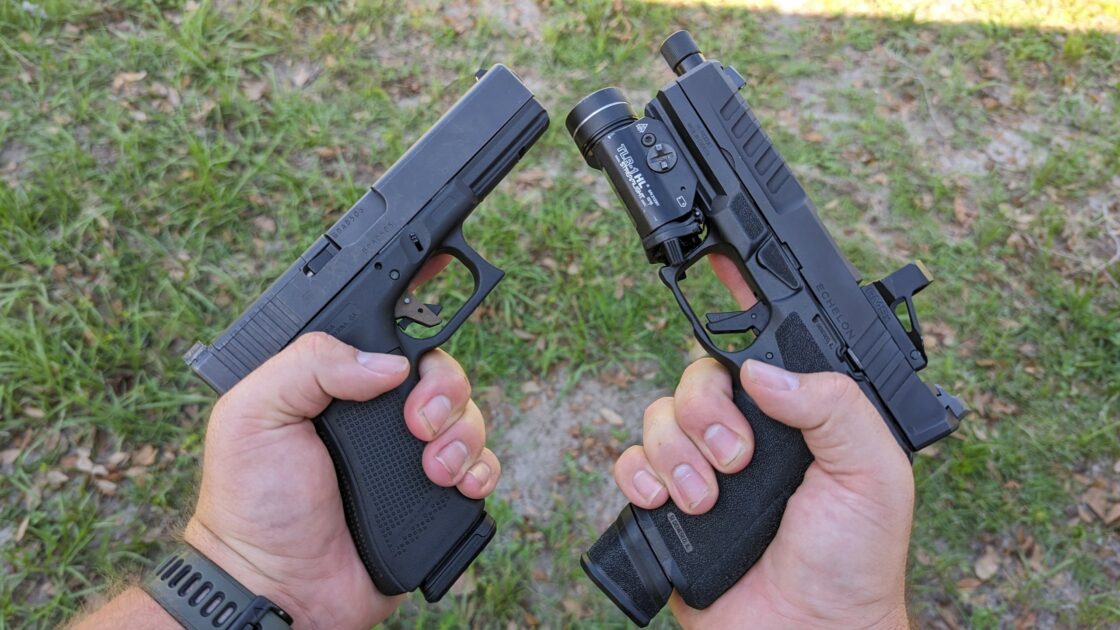
With introductions out of the way, let’s dive into seeing where the two guns differ and where they converge. We’ll go category by category to determine which gun might be better for you.
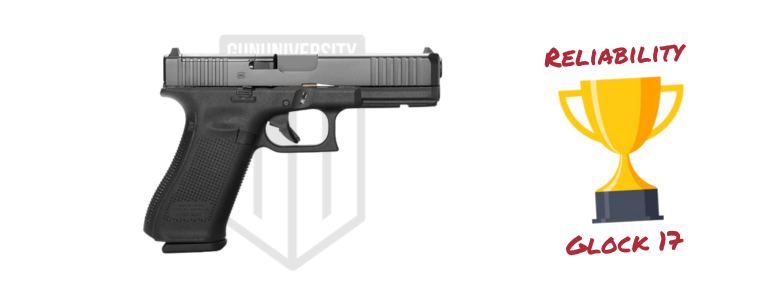
Reliability
In the two years since this piece was written, my personal experience with the Echelon has been flawless. Between thousands of rounds fired, multiple competition stages, and a dedicated shooting class, the Echelon has had zero malfunctions, quickly cementing its own reputation for mechanical excellence. It has proven itself to be a competent weapon that simply refuses to fail.
This immediate and proven reliability brings us to the elephant in the room: the Glock 17. When discussing service pistols, it’s essential to acknowledge that the Glock series changed the game.
They single-handedly raised the expectations for the reliability of a modern service handgun, and its track record is a reliability gold standard built over decades. I’ve owned several Glocks, including multiple generations of the Glock 17, and they run like absolute champions—even when they are filthy, dirty, and full of sand. I have yet to have an issue with reliability from a Glock.
While the Glock still edges out the Echelon in terms of ultimate reputation purely due to longevity, the Echelon is no slouch. It may not boast decades of historical success and a proven track record in the worst conditions possible, but its out-of-the-box performance has proven the design successful.
Accuracy
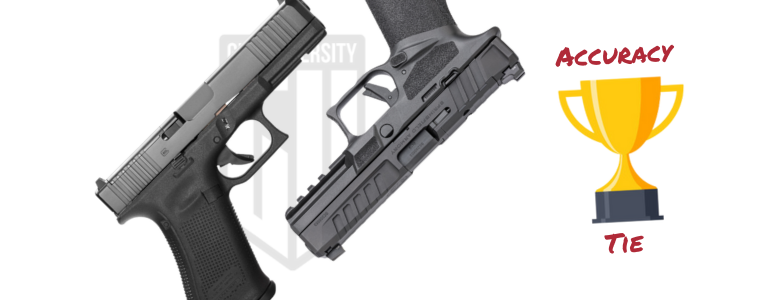
When it comes to shooting handguns, the accuracy of the gun is really determined by the shooter. A good shooter will shoot most guns accurately. Modern manufacturing has made it so most guns are going to be perfectly adequate in the accuracy department.
Luckily for us, it seems pretty tough to make a gun that’s not accurate these days, especially a handgun. Both the Echelon and the Glock are full-sized handguns, and their mechanical accuracy is essentially equal. Are there some slight differences in trigger pulls and sights? Sure, but they are really minor differences that are often blown up by the internet at large.
A good shooter will have no problems shooting either weapon accurately.
Ergonomics
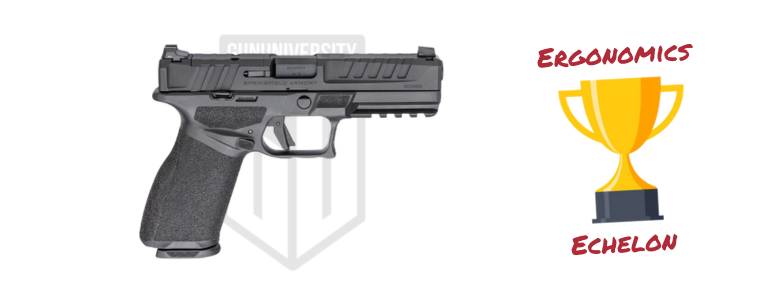
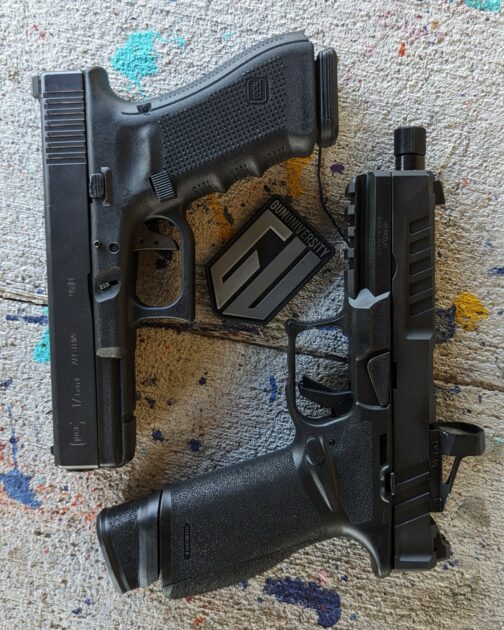
Two years later, the Echelon still pulls ahead at ergonomics. The thinner grip is fantastic, especially near the top of the grip. Glock is really stuck on their block-like grip on top of their difficult-to-press magazine release, dinky slide releases, and two generations of finger grooves. Admittedly, the Gen 5 did wonders to improve Glock ergonomics.
Despite those improvements, the Echelon is the superior gun from the first grip. It’s thinner, feels much better in the hand, and allows for a much higher purchase. The trigger guard has a nice undercut, and the rear of the grip has an overhang. Outside of the Gen 5, the Glock series has always come with a bit of slide bite for me. That’s not an issue with the Echelon at all.
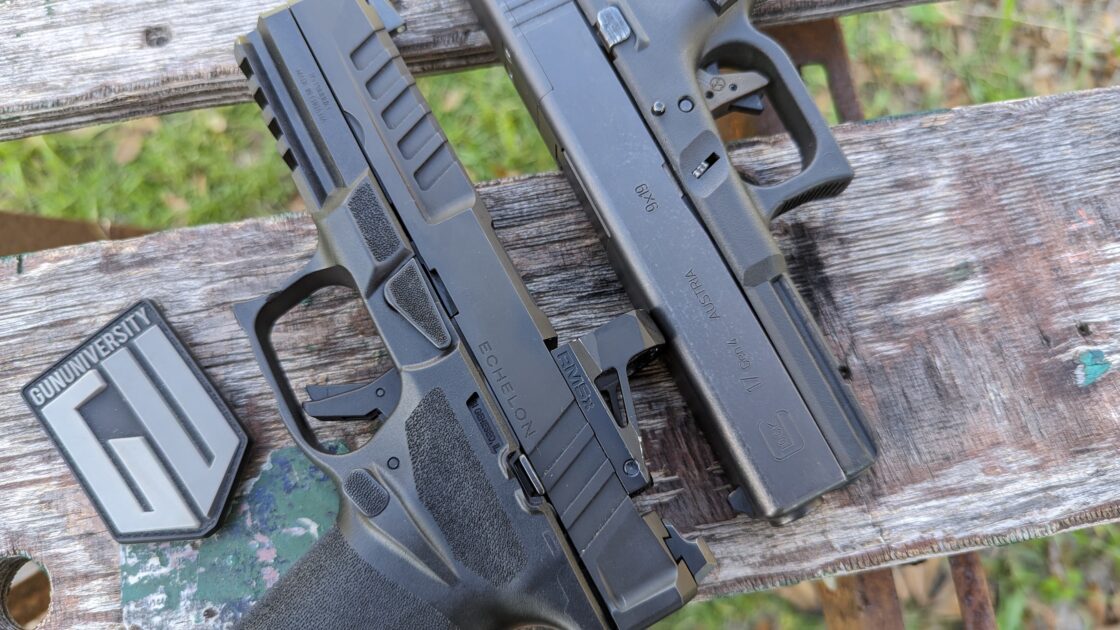
Beyond the grip, the Echelon continues to impress with its controls and features. The Glock trigger is perfectly adequate, but if you’ve ever fired one for an extended period, you’ll know how the safety dingus can rub uncomfortably on your finger. This isn’t an issue with the Echelon’s trigger design. The Echelon gives us fully ambidextrous controls, including the magazine release and slide lock. While I do think the slide lock is a bit dinky and seems to be trying to tie Glock for the tiniest control, the ambidexterity is a massive win for modern use.
Finally, one neat feature often overlooked on the Echelon is the rear wings. These aren’t just for looks; the scalloped areas at the rear of the slide make it incredibly easy to rack the gun. Whether your hands are sweaty, you’re wearing gloves, or you have an optic mounted, these wings provide exceptional purchase.
Shootability
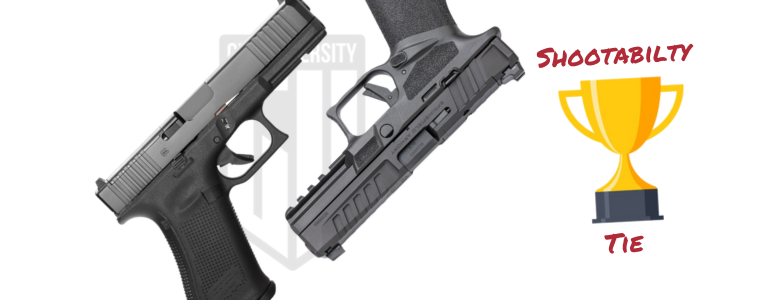
Duty-sized guns that weigh nearly the same that fire the same cartridge both tend to be low-recoiling, easy-to-control weapons. The Glock 17 and the Echelon are both easy to fire and keep on target. You’ll notice minimal muzzle rise, and your sights will find their way quickly back on target. I can easily fire both guns with a single hand, and they are well-suited for competition, training, duty, and defense.
Value
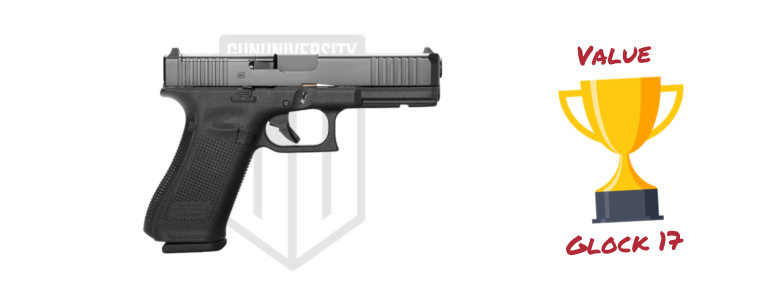
The Glock series is slightly cheaper than the Echelon. You can get a Glock Gen 4 for a great price, often less than six hundred for the MOS model. The Glock Gen 5 is nearly tied with the Echelon. While the Echelon isn’t the most expensive gun, it’s a hair more expensive than most of the Glock series. Even if it was cheaper, the Glock series would still pull ahead.
One of the big reasons why the Glock is more affordable is that the magazines for it are so much cheaper and easier to find. Additionally, finding replacement parts isn’t only easier but cheaper. The Glock series has been around for decades, and that also means you’ll be able to find budget-ready holsters, sights, and accessories. Glocks are simply cheaper and offer a better value to the end user.
Modularity
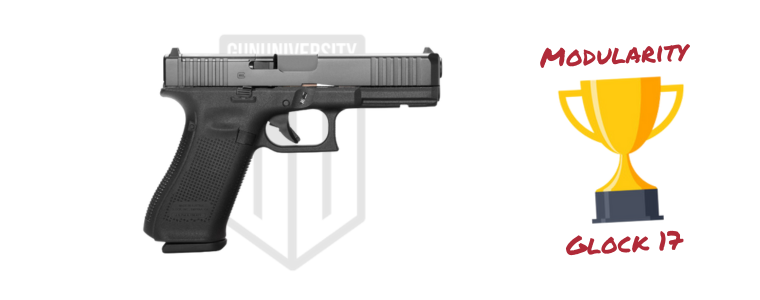
I keep saying that Glock wins because it’s been around for decades, and that’s true. That has helped the Glock really pull ahead and maintain its dominance. That’s true here. There are so many Glock accessories you could assemble a Glock without any parts actually made by Glock. You can swap triggers, sights, magazines, magazine releases, add mag wells and threaded barrels, and hell, you can turn a Glock into a rifle!
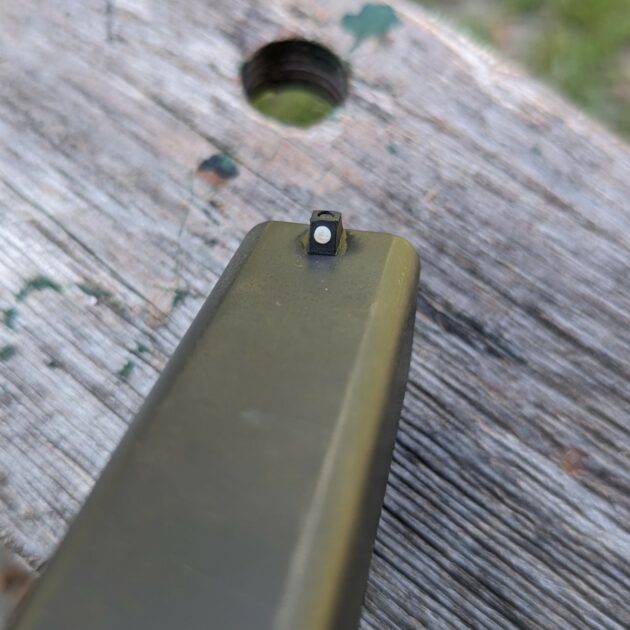
Glock dominates the aftermarket. The gun is very simple, which makes it easy to work on and to add parts, pieces, and various upgrades. At this moment, the Glock is the more modular platform.
The Echelon has a lot of potential to become more modular. The Echelon uses an internal chassis system that’s removable and is the serialized portion of the gun. What this means is the COG, as they call it, can be removed and swapped to various grips. Springfield Armory makes several sized grips. Moreso than that, there is the potential for various upgrades in the future to swap calibers, slides, and more.
While the potential is there, and the Echelon is modular, it hasn’t reached the crazy level of Glock modularity.
Optic Ready – Echelon
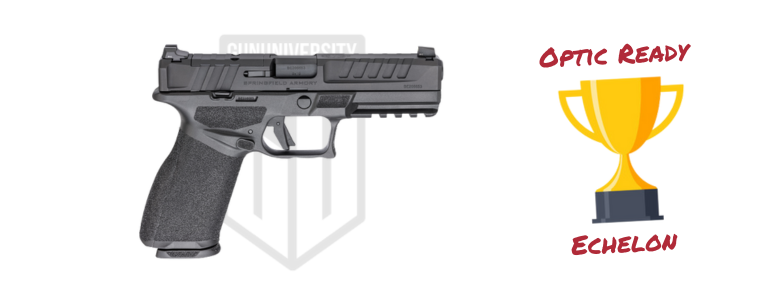
Optics readiness isn’t a category we usually judge, but both the Echelon and Glock MOS systems offer a multi-mount design to accommodate multiple optics. The optics industry can’t agree on a single footprint for pistol-sized optics, so we have to have multiple options to fit all these optics.
Glock uses a plate system that is pretty revolutionary and mostly useable. It allowed you to mount whatever optic with a system of four plates, and additional plates have been produced since then. The main problem was that the early Glock plates weren’t always reliable, leading to an aftermarket of plates that were better. Plates also ensure you have to stack tolerances, which can lead to reliability issues.
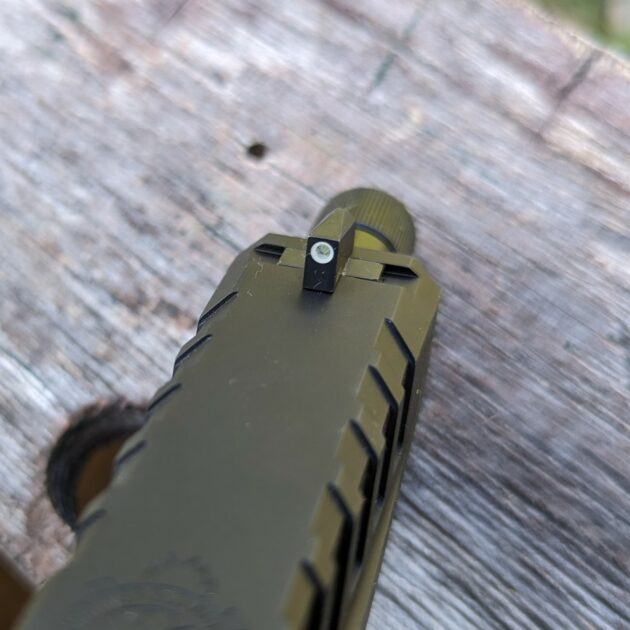
One of the Echelon’s standout features is the ability to add optics without plates. They call it the VIS or variable interface system. This allows you to add various pins to the top of the slide to accommodate various optics. No slide plates are required, so no tolerance stacking. The optic sits lower as well. I will also say The Echelon comes stock standard with suppressor height iron sights to allow for co-witnessing. This is a significant feature to include stock on the gun.
The downside to the Echelon is that, currently, there is only a little support for an enclosed optic. I believe only modular optics like the SIG ROMEO2 and Burris Fastfire 4, and the wisely designed Holosun EPS will work. It also seems like the RCR from Trijicon will work, but I need help to test that theory to verify.
Glock 17 vs Springfield Echelon – Our Grades
Glock 17 Gen 5 MOS
Shootability
A+Reliability
A+Ergonomics
AAccuracy
AValue
AFinal Grade: A
Springfield Echelon
Shootability
A+Reliability
A+Ergonomics
A+Accuracy
AValue
A-Final Grade: A
And the Winner Is?
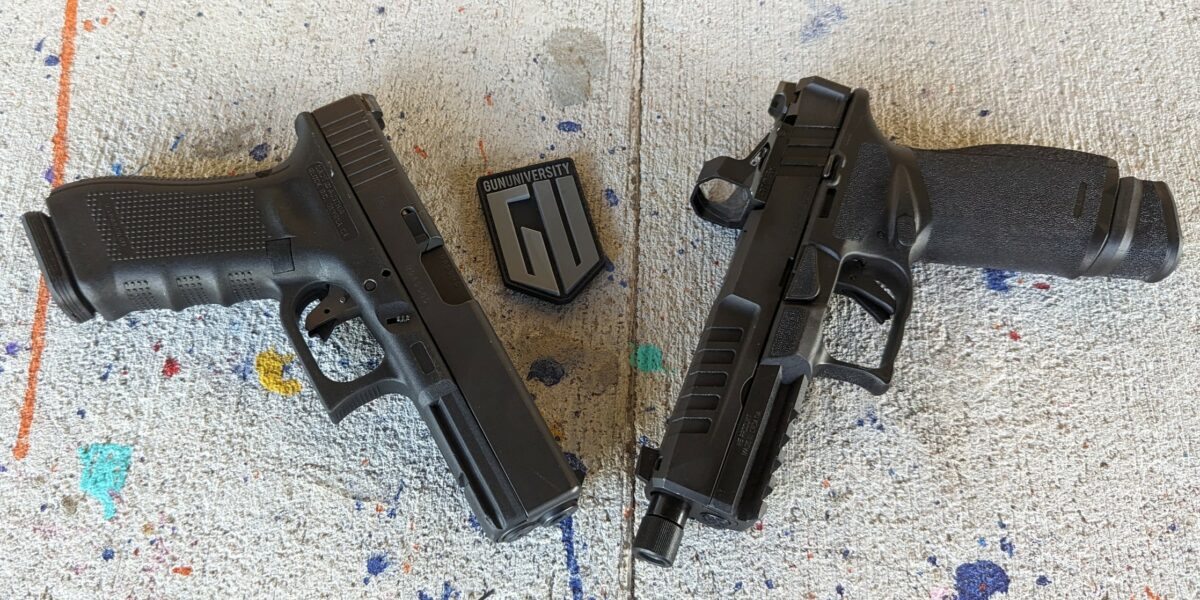
At this point, you have to ask yourself. Do you want to go with what’s already very proven, modular, and easy to accessorize, but stay stuck somewhat in the past? Or would you move forward with a platform that’s stepped a bit into the future? That’s the question you have to ask yourself. Let us know below which gun you’d prefer.
Two years ago, I said the Glock 17 won, but now, I’m not sure. If you were to ask me what gn I prefer I’m going to pick the Echelon. Don’t forget to check out our best 9mm pistols article to see more of our favorite handguns and jump over to our complete Glock 17 review to learn even more about today’s winner.
Upgrades and Accessories for your Glock 17 or Springfield Echelon
The optics and weapon light suggestions are shared for both the Glock and Echelon. We also think you will want to stock up on both flush and extended magazines.
Upgrades and Accessories
Magazine Glock, 17 Round Factory Magazine | 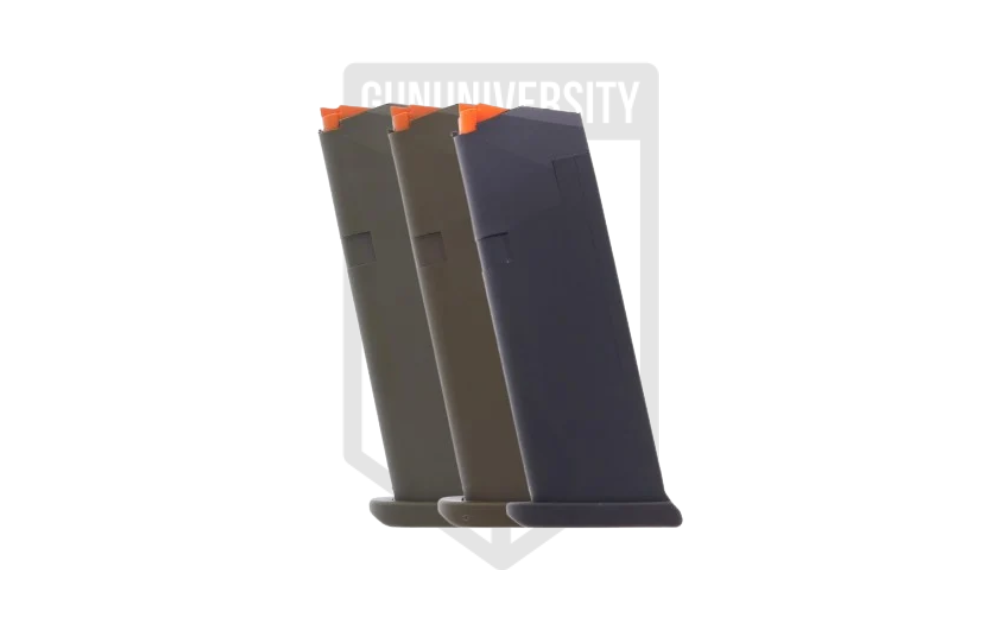 |
| Check Price |
Extended Capacity Magazine Glock, 24 Round Factory Magazine | 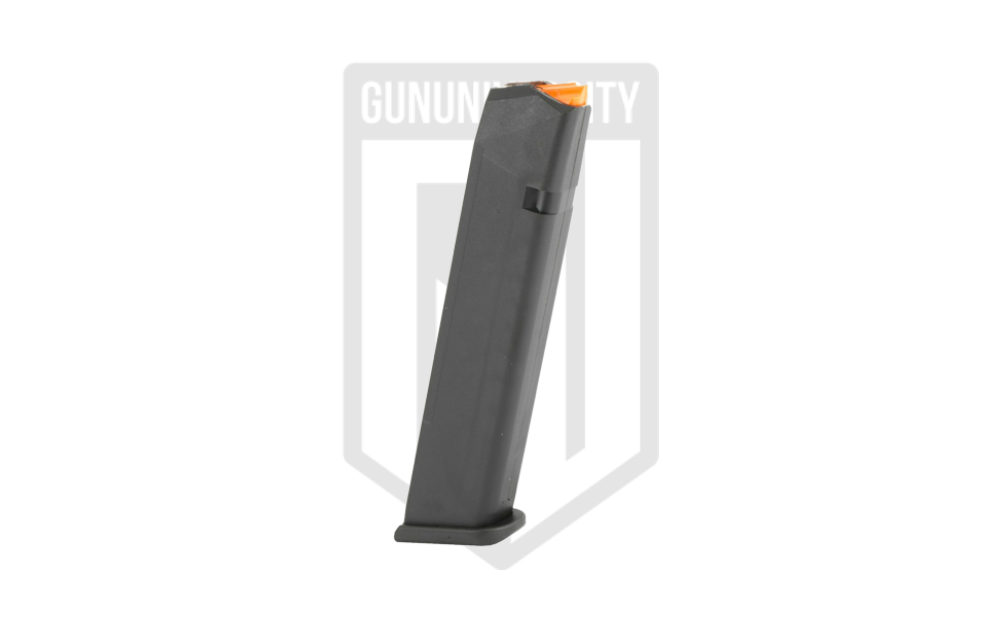 |
| Check Price |
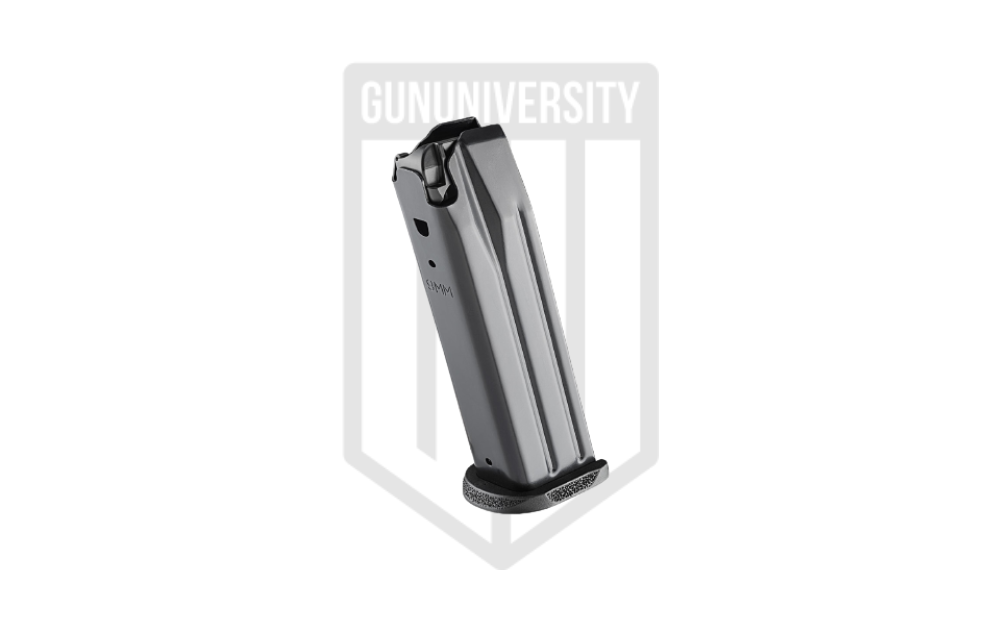 |
| Check Price | |
Extended Capacity Magazine Springfield Echelon 20 Round Magazine | 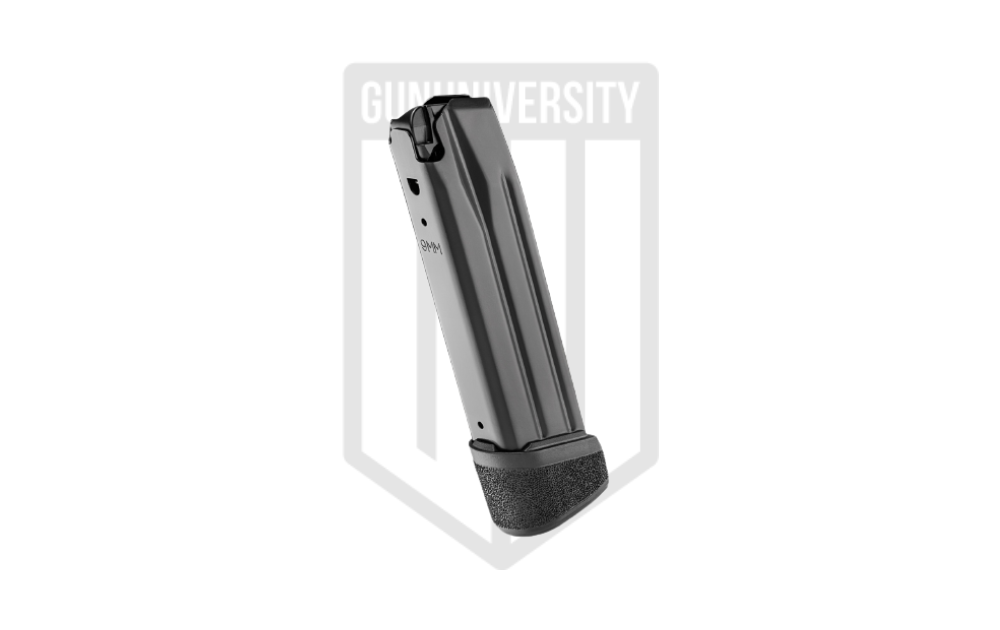 |
| Check Price |
Weapon Light – Budget Streamlight TLR-1 HL |  |
| Buy on Amazon |
Weapon Light SureFire X300 | 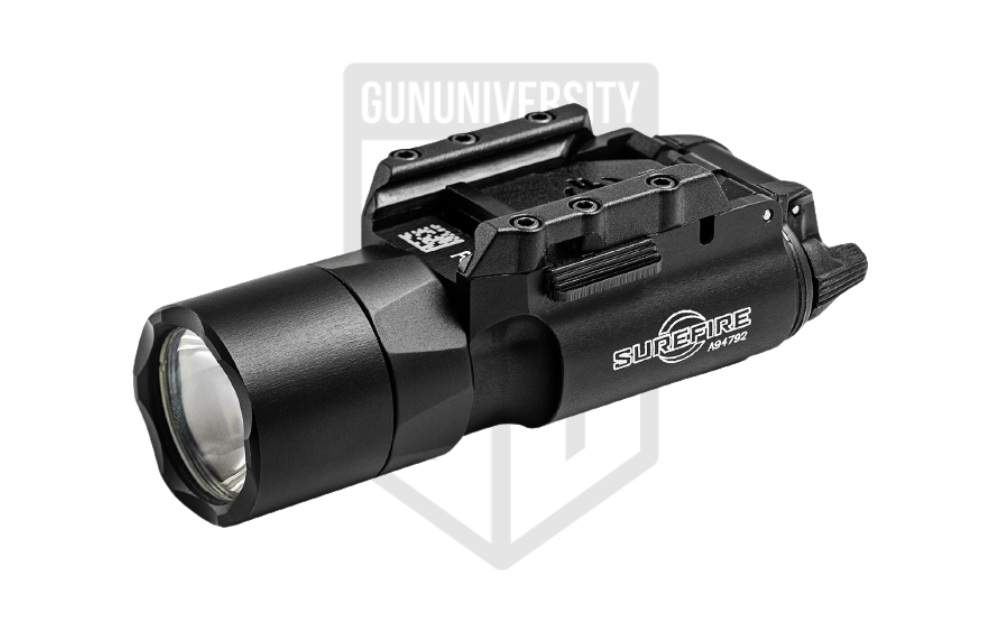 |
| Buy on Amazon |
Red Dot Trijicon RMR Type 2 |  |
| Buy on Amazon |
Red Dot Aimpoint Acro P2 | 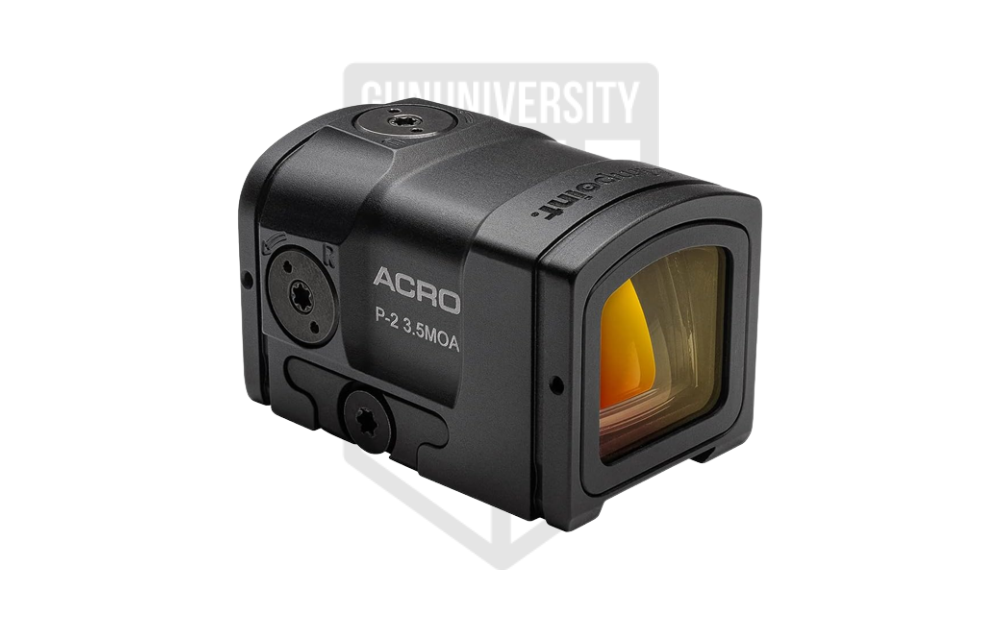 |
| Check Price |
Important Links and Videos
Here are some links to the Glock and Springfield Armory website for each model discussed today and the owners manuals.
- G17 by Glock
- Glock Owners Manuals
- Echelon by Springfield Armory
- Springfield Armory Echelon Operation & Safety Manual
Here is a video how to care for you Glock pistol.
Here is a video on how to care for your Springfield Echelon, including one on making sure your magazine is assembled properly.
About Travis Pike

Travis Pike is a former Marine Machine Gunner and a lifelong firearms enthusiast. Now that his days of working a 240B like Charlie Parker on the sax are over, he's a regular guy who likes to shoot, write, and find ways to combine the two. He is a "simplicisist" when it comes to talking about himself in the 3rd person and a self-professed tactical hipster. Hit him up on Instagram with story ideas.
Recent Posts

March 7, 2026
March 7, 2026

March 7, 2026