
Best Scopes For The 450 Bushmaster [UPDATED]
I personally love shooting a 450 Bushmaster, and so, because of this, I’m constantly asked what is the best scope for the 450 Bushmaster.
Truth is, that kind of depends. It depends on what you’re using it for, and the type of optics. But if you clarify those two particular things, because fo the way the cartridge works, there are actually certain types of scopes or optics that work best for this platform.
The 450 Bushmaster As A Round

Before I get into listing my favorite scopes for the 450 bushmaster rifles, let’s first discuss a bit about the 450 bushmaster, and some of the key aspects to keep in mind when selecting an optic to go with it.
Starting with its history, in 2007 Tim LeGendre of LeMag firearms began the development of the 450 Bushmaster. The round was based on Jeff Cooper’s Thumper concept. This concept called for an AR 15 caliber that was capable of taking big game. The 5.56 round was great, but it didn’t do well against medium to large game. The idea would be a straight-walled cartridge with a 45 caliber projectile useful for out to 250 yards.
Now, this is where we really start to understand its limitation, and thus helps us with scope selection because its basically accepted that 250 yards is the accepted max range of the Bushmaster. However, making shots at 350 and even 400 yards is possible with modern, lighter projectiles.
What Uses to 450 Bushmaster Rifles Have?
The round was designed for hunting purposes, mostly with big North American game in mind. It’s capable of taking bear, large hogs, elk, and even your standard whitetail deer. Some states have specific laws regarding what type of rifle cartridge can be used while hunting, with straight-walled cartridges being a requirement. The 450 Bushmaster fits the bill to a T. Some might compare it to the 308 Winchester.
Finally, if you live in a ban state with restrictive magazine capacity laws, then it makes a lot of sense to pack ten 450 Bushmaster rounds over ten 5.56 rounds. The bigger round will deal significant damage, and if you can deal with the increased recoil, then the bigger, harder-hitting round is worth it. Although if you live in free states, I’d gladly take 30 5.56 over ten 450 Bushmaster rounds.
Now, what’s interesting is that you can not only find this caliber in AR-15’s, but they’ve made their way into Bolt Action rifles, single shots, and even pistols. This includes a revolver from Magnum Research and a number of single-shot, large format pistols. These big handguns require crazy eye relief because you must extend your arms to fire them. Handguns obviously have a lower effective range simply because it’s a handgun. As such, you’ll want a lower-powered scout-style scope or a red dot for them.
Types of Optics for the 450 Bushmaster
Now that we covered the 450 Bushmaster’s uses, and history, let’s take a brief moment to discuss the different types of optics. This way, when I use certain terms, you’ll understand exactly what I mean and better understand the optics I’m talking about.
Red Dots – Red dots are simplistic optics that utilize a simple red dot as the reticle. However, some use more complicated reticles that are more versatile. These optics are quite handy for close-quarter shooting between 0 and 100 yards. Red dots have zero magnification but can be backed by a magnifier to extend your range.
LPVOs – LPVO stands for Low Powered Variable Optics. These optics typically start at 1X or 1.5X and can go anywhere from 4X to 10X. These offer nearly unbeatable versatility and are well suited for the 450 Bushmaster and its effective ranges.
Variables – Variable optics are your traditional rifle scopes that pack nearly any level of magnification. From 3-9X all the way to something crazy like 10 to 80X. Sure they might not always be handy on the 450 Bushmaster, but the more moderate options work well for hunters.
Fixed Power and Prisms Fixed power optics, and prism scopes offer one magnification setting often beyond 1X. These are typically lower-powered and rarely rise above 5X. They usually offer magnification on the lower side but have a smaller footprint and are fairly lightweight. This makes them well suited to the 450 Bushmaster.
Best 450 Bushmaster Scopes
Okay, so now that we’ve covered the uses of the 450 Bushmaster as a caliber, and discussed some of the types of the scopes, let’s combine this to finally list my favorite scopes for this type of gun:
Best 450 Bushmaster Scopes
 |
| Check Price | |
 |
| Check Price | |
 |
| Check Price | |
 |
| Check Price | |
 |
| Check Price | |
 |
| Check Price | |
 |
| Check Price |
| Scope | Magnification | Length | Weight | Optic Type |
|---|---|---|---|---|
| Leupold FXll Ultralight | 2.5X | 8 inches | 6.5 ounces | Fixed Power Scope |
| Leupold VX-Freedom 450 Bushmaster | 3-9X | 12.49 inches | 12.2 ounces | Variable |
| Holosun 509T | 1X | 1.13 inches | 1.72 ounces | Red Dot |
| EoTech 552 | 1X | 5.6 inches | 11.5 ounces | Holographic |
| Primary Arms SLx 5X MicroPrism | 5X | 3.31 inches | 8.5 ounces | Prism |
| Burris Fullfield E1 Riflescope 3-9X40mm | 3-9X | 12.2 inches | 13 ounces | Variable |
| Trijicon TR24 Accupoint | 1-4X | 10.3 inches | 14.4 ounces | LPVO |
List of the Best Scopes for the 450 Bushmaster
When it comes to the 450 Bushmaster, the following are my recommended scopes:
- Trijicon TR24 Accupoint
- EoTech 552
- Leupold FXII Ultralight 2.5x20mm
- Leupold VX-Freedom 450 Bushmaster 3-9x
- Primary Arms SLx 5X ACSS
- Holosun 509T
- Burris Fullfield E1 Riflescope 3-9X40mm
The Best 450 Bushmasters Scopes Reviews
We’ve listed out our top 7 choices for the Best 450 Bushmaster Scopes above. Now, I’m going to go through each of individually, and break down each scope, their specs, my review, their pros and cons and price points. This way, I can basically argue why I listed them as I did.

Trijicon TR24 Accupoint Specs
- Magnification 1-4X
- Length 10.3 inches
- Weight 14.4 ounces
- Optic Type LPVO
Trijicon TR24 Accupoint Review
The Accupoint is an OG LPVO from Trijicon. It was one of the first real popular options, and the Accupoint delivers a rather solid little compact optic. The TR24 might be considered a little outdated in the face of 1-10X LPVOS, but for a 450 Bushmaster, it offers an excellent option for range. It gives you red dot performance with a true 1X low-end magnification, and when you extend the magnification range to 4X, you can easily reach out and touch a target at the max 250-yard range of the 450 Bushmaster round.
Reticle selection is important and for the 450 Bushmaster and the TR24 offers a red or yellow triangle option. These massive triangles are perfect for snapshots and rapid engagements, which are ideal for close-range hunting and still viable at the 4X magnification. The little reticle is illuminated brightly, but if batteries die, the reticle is etched.
Trijicon built this optic with a generous eye box and a respectable eye relief of 3.2 inches. This makes it fast and capable of getting behind and on target. It offers you both defensive capability and hunting capability and sits well on any rifle.
One problem I have with this though is that this is a very expensive scope compared to others on my list. So, if that is a problem for you, then you might want to check out the Holosun HS512C discussed below. Otherwise, this is an excellent scope for the 450 Bushmaster and you won’t be disappointed.
Trijicon TR24 Accupoint Pros and Cons
- Light and Compact
- Versatile magnification range
- Rugged and Durable
- Expensive
Trijicon TR24 Accupoint Deals
-
$714.56
-
$748.99
EoTech 552 Specs
- Magnification 1X
- Length 5.6 inches
- Weight 11.5 ounces
- Optic Type Holographic
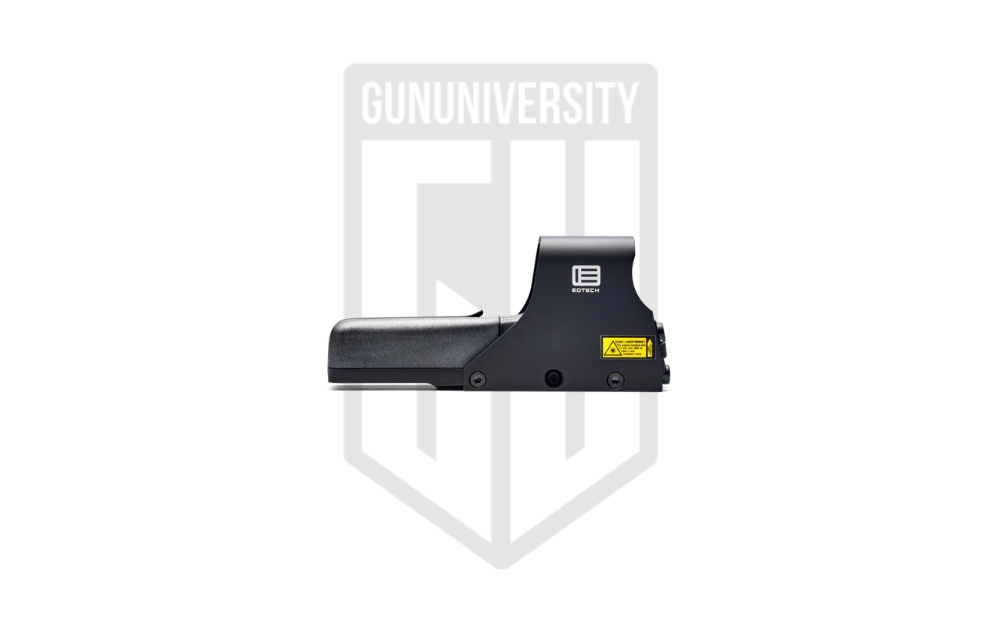
Eotech HWS 552 Review
When it comes to reflex sights, you have three options: red dots, 1X prisms, or holographic sights. When you get to holographic sights, you really only have one viable option, and that’s EOTech. EOTech made its name and brand on holographic optics. Holographic optics are fantastic and provide a crisp, clear reticle with excellent night vision performance and magnifier compatibility.
If you’re looking to hunt within 100 yards or so with your .450 Bushmaster, the EOTech HWS 552 will be tough to beat. It gives you the traditional circle-and-dot EOTech reticle, a rugged optic design, and decades of proven performance from the one company that’s mastered the holographic optic.
Where I think this optic really shines is for .450 Bushmaster hog hunters. Hogs are a nuisance, and the .450 Bushmaster dispatches them with ease. It can take on the biggest “hogzillas” with a single well-placed shot. Since hogs are such a nuisance, most states have liberal rules when hunting them. Night hunts for hogs have become popular, and if you’re pairing night vision with an optic, the HWS 552 is tough to beat.
It’s night vision compatible but a fair bit cheaper than the smaller XPS models. It gives you easy access to night vision modes with a dedicated NV button. If you need to expand your range, a magnifier is a simple attachment to give you anywhere from 3X to 6X magnification.
EOTechs can be a little pricey, but the 552 isn’t overly expensive. The optic can put a big round right where you want it and down a deer, hog, or similar-sized game with ease. For some bolt-action rifles, it will feel a bit high and is best paired with an AR-type rifle and its inline stock.
EoTech 552 Pros and Cons
- Robust and Durable
- Perfect for Close Range Use
- NVG Compatible
- AR Height mount only.
EoTech 552Deals
-
$479.99
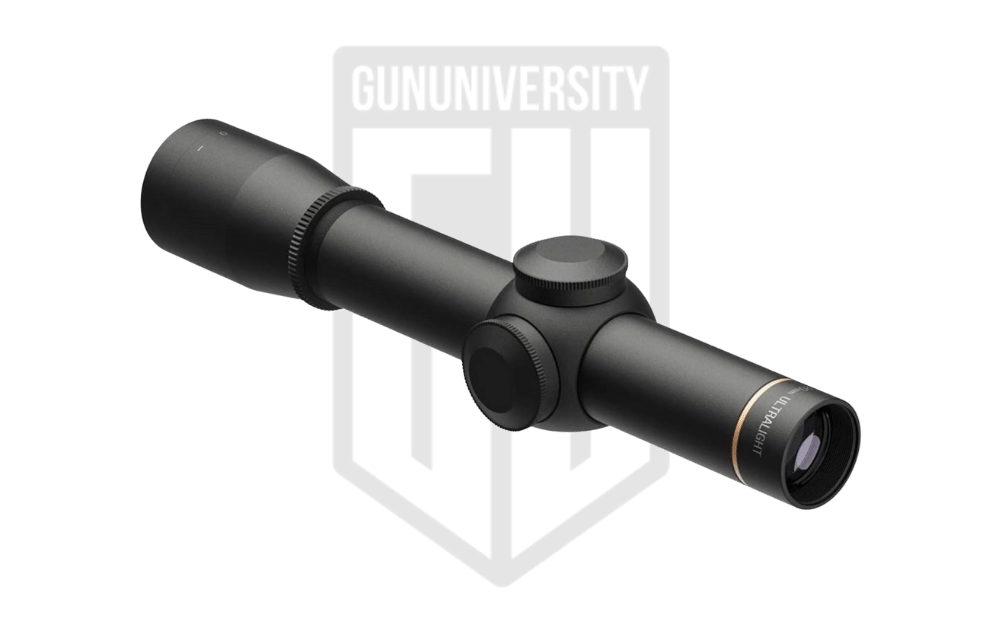
Leupold FXll Ultralight Specs
- Magnification 2.5X
- Length 8 inches
- Weight 6.5 ounces
- Optic Type Fixed Power Scope
Leupold FXll Ultralight Review
Keeping in mind the limited range of the 450 Bushmaster, it’s tough not to love the FXII Ultralight. As a fan of light and handy rifles, I’m also a fan of light and handy optics. With the name Ultralight, you might wonder how much it weighs. Well, it’s a mere 6.5 ounces! That’s it. The super-light little optic packs only 2.5X magnification and is a fixed power optic. That low level of magnification makes it handy at both close and moderate ranges.
The Leupold FXII Ultralight provides a very simple option for those wielding something like the Henry or CVA single shot 450 Bushmaster rifles. It keeps things lightweight and makes it capable of getting snapped onto a target for rapid shots, but it also allows you to slow down and take those shots at more moderate ranges.
The wide duplex reticle is easy to see as well as wide and thick enough to provide a consistent reticle at close range. The FXII Ultralight optic provides a generous eye relief that allows you to get behind the gun and get on target with little drama. Like most Leupold optics, the Ultralight is extremely durable, well made, and will easily stand up to the rigors of the world.
So, in closing, this is a generally good optic, however, it isn’t the best in any particular category. It will serve its purpose and does most things well. It’s not a premium, but a ‘capable’ option for you to choose for your .450 bushmaster.
Leupold FXll Ultralight Pros and Cons
- Superbly Lightweight
- Robust
- Quick On Target
- Jack of All Trades but Master of none
Leupold FXll Ultralight Deals
-
$299.99
-
$299.99
-
$299.99
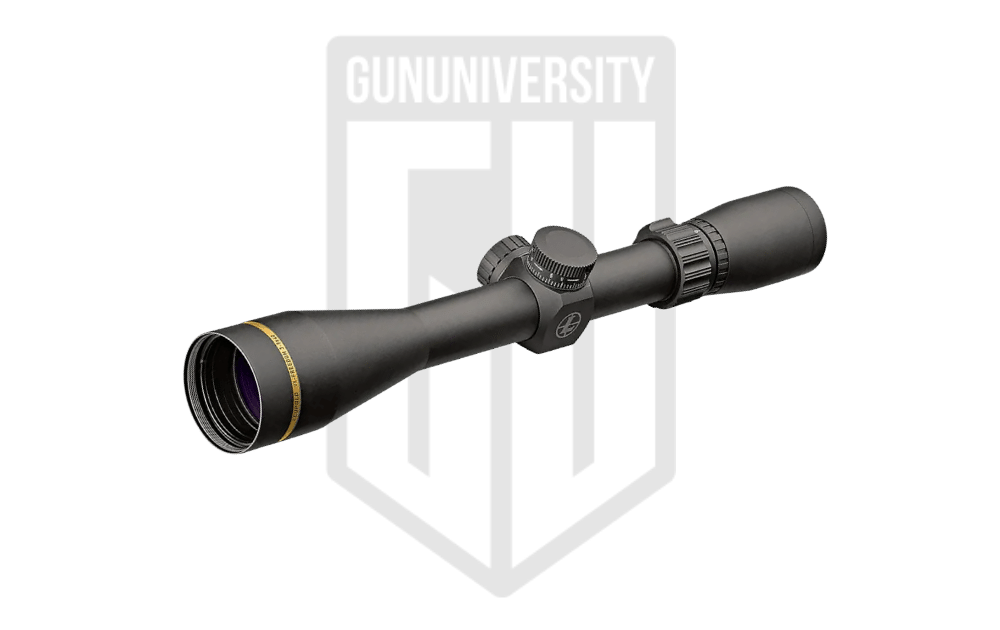
Leupold VX-Freedom Specs
- Magnification 3-9X
- Length 12.49 inches
- Weight 12.2 ounces
- Optic Type Variable
Leupold VX-Freedom 450 Bushmaster Review
Finding high-quality optics designed specifically for the 450 Bushmaster is tough. It’s a niche caliber among a world of 5.56 rifles. The VX-Freedom 450 Bushmaster provides a 3-9X optics option for the hunter wielding the 450 Bushmaster. That magnification range is perfect for a variety of environments for both close and far ranges. The straight-walled 450 Bushmaster is a 250-yard cartridge, and 9X provides plenty of magnification for that.
The VX-Freedom is a Leupold optic, and that alone is a testament to their durability, purpose, and design. Leupold has been in this game for decades, and they’ve mastered the art of producing high-quality optics. You are spitting hefty chunks of lead, and the protection from recoil is a must-have. It’s incredibly simple but effective in its construction and design.
So, where does the 450 Bushmaster come into this optic? It’s not the reticle. That’s a very fine duplex that works well with a 100 yard zero. What’s makes the VX-Freedom 450 Bushmaster approved are the custom dials. These turrets allow you to dial in your shot with no-guess elevation adjustments. If you need to make that precision-driven 200-yard shot, you can dial it in and destroy whatever target you’re aiming at.
However, one issue I have with this one isn’t just the weight but how bulky this can be. It can take up a lot of space and leave a large footprint. Other than that, it’s definitely a great option for you, if you’re looking for a solid scope.
Leupold VX-Freedom Pros and Cons
- 450 Bushmaster Ready
- Versatile 3-9X magnification range
- Leupold reliability
- Large Footprint
Leupold VX-Freedom Deals
-
$299.99
-
$299.99
-
$299.99
Primary Arms SLx 5X MicroPrism Specs
- Magnification 5X
- Length 3.31 inches
- Weight 8.5 ounces
- Optic Type Prism
Primary Arms SLx 5X MicroPrism
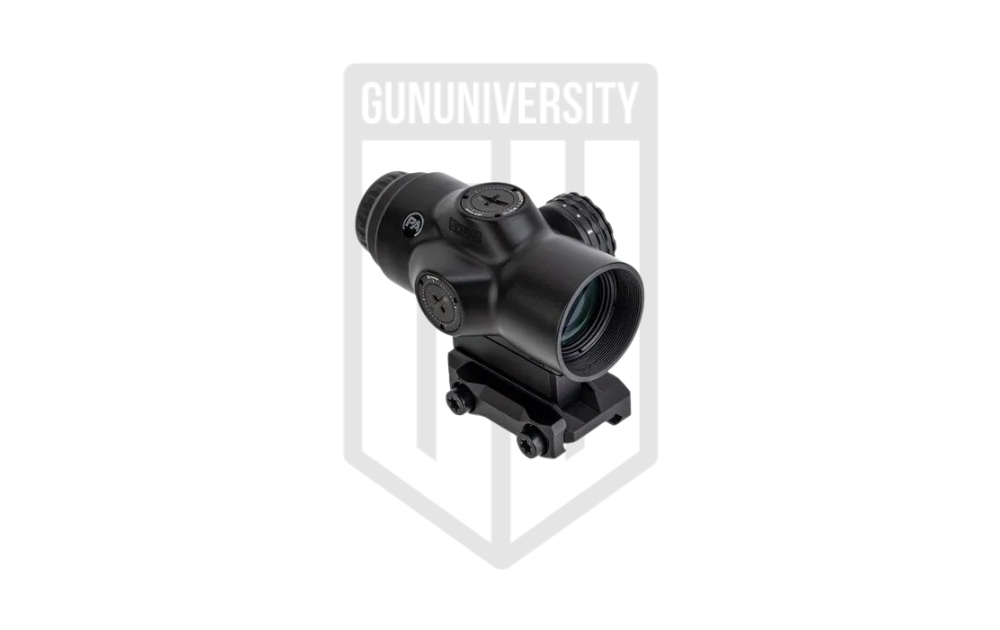
I’m an unashamed prism enjoyer. I like simple things, and I don’t have access to shoot all that far in my area, so a prism with its limited magnification works for me. For the .450 Bushmaster, you’re not shooting all that far anyway. It’s a cartridge designed for 300-yard shots with a steep bullet drop after 200 yards. This makes it well-served by a prism sight.
The Primary Arms SLx MicroPrism gives you 5X magnification in an extremely small package. The five-power magnification gives you more than enough power to engage out to 300 yards. Most Primary Arms optics use an ACSS reticle dedicated to a specific cartridge, but the ACSS Aurora MIL uses milliradian dots.
This allows the user to accurately estimate their bullet drop regardless of caliber. Just match your “dope” to the MIL reticle, and you can have designated drop points to get over that steep post-200-yard bullet drop. The illuminated chevron zeroed at 50 yards gives you a solid maximum point-blank range option.
The 5X prism is super small for its magnification. It takes up very little rail space, and the mount can be higher or lower, creating an optic that can be used for a variety of different rifle types. Like any prism, the eye relief is a little tight at 2.7 inches, but you won’t get a black eye from the weapon recoiling.
The Aurora reticle can be a little busy. It’s got a “Christmas tree” drop reticle for windage and drop, as well as wind estimations on the side. A lot of that won’t be all that useful for the .450 Bushmaster and its limited range. It’s not something you can’t work with, but just be aware of that busy view.
Primary Arms SLx 5X MicroPrism Pros and Cons
- Great Field Of View
- Affordable
- Robust
- ARs only
Primary Arms SLx 5X MicroPrism Deals
-
$339.99
6. Holosun 509T
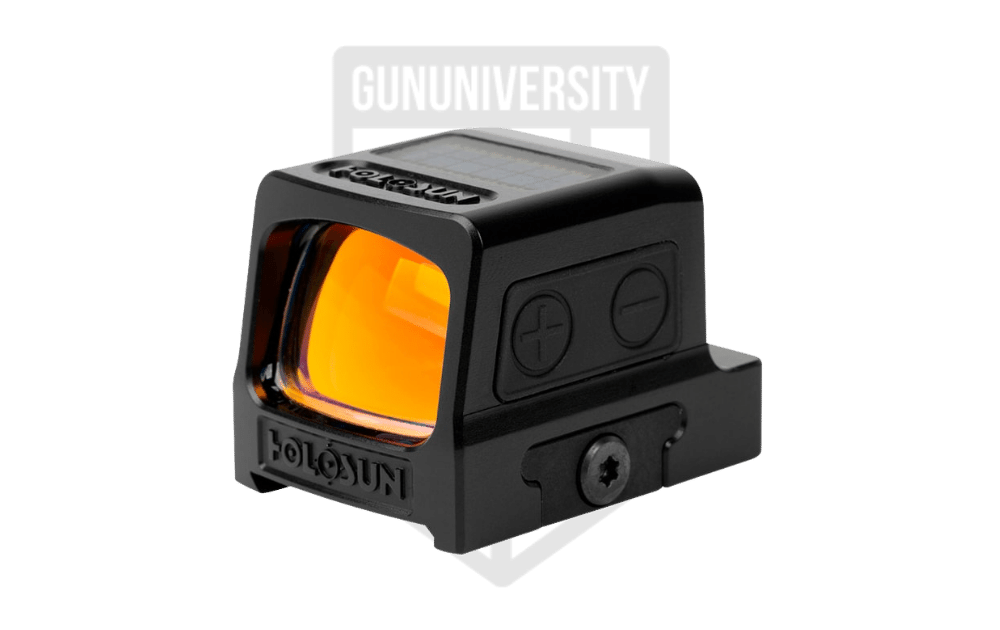
Holosun 509T
The Holosun 509T checks both the high-quality box and the affordably priced point.
Holosun 509T Specs
- Magnification 1X
- Length 1.13 inches
- Weight 1.72 ounces
- Optic Type Red Dot
Holosun 509T Review
Another Holosun, but it’s an enclosed optic that provides the same durability and reliability as a well-made rifle optic. The Enclosed nature of the 509T makes it perfect for a multitude of roles, even within the 450 Bushmaster. It could be an offset optic for a magnified option or even on a 450 Bushmaster AR-type rifle if you want a light and easy handling optic. To me, this is perfect for the 450 Bushmaster pistol.
The 450 Bushmaster comes in both single-shot pistols and massive revolvers from companies like Magnum Research. Popping an optic on the gun just makes sense. With the Holosun 509T on board, you have a reliable and durable optics option for hunting. It doesn’t have a ton of weight to the gun and has unlimited eye relief. You can reach out and extend your effective range over iron sights significantly with a red dot.
The Holosun 509T comes with multiple reticles, including a 2 MOA dot, a 32 MOA circle, and a 2 MOA dot with a 32 MOA circle. The big reticles make those fast shots quick, and the little dot makes it easy to see your target at multiple ranges. It also has a brilliant solar panel to help power the optic and compatibility with Trijicon RMR mounts for easy aftermarket mount finding.
Holosun 509T Pros and Cons
- Solar Powered
- Super Small
- Extremely Well Made
- Expensive
Holosun 509T Deals
-
$702.99
-
$329.49
Burris Fullfield E1 Riflescope 3-9X40mm Specs
- Magnification 3-9X
- Length 12.2 inches
- Weight 13 ounces
- Optic Type Variable
Burris Fullfield E1 Riflescope 3-9X40mm Review
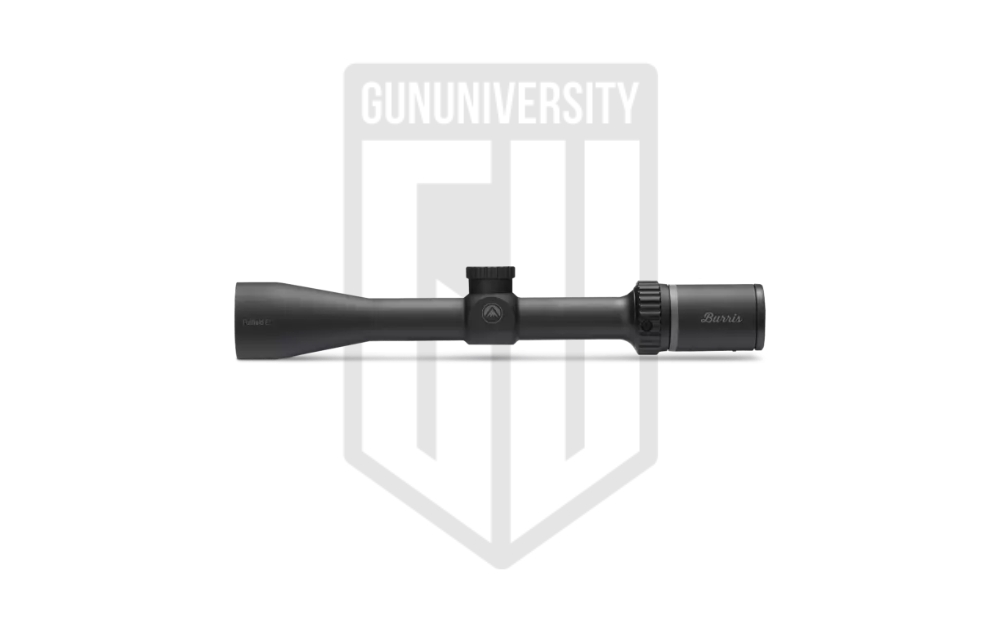
It doesn’t get much more traditional than a classic 3-9X40mm scope. The 3-9X tends to be a solid option for variable hunting optics. It gives you more than enough magnification to take advantage of the .450 Bushmaster. The Burris Fullfield E1 Riflescope gives you that classic 3-9X performance.
Even for short range, magnification can be handy. It’s easy to confirm the deer is big enough or pick the biggest hog from the bunch. If you have to turn a coyote inside out as the sun sets, then that extra magnification can help. Building on that, Burris is one of the few companies producing a BDC directly for the .450 Bushmaster round.
This BDC allows you to stretch the round’s legs to 500 yards, but that’s a long way for the “thumper.” Still, being able to make instant adjustments with just a little push of the gun makes it quite handy. The reticle is simple with a plex design and a few dots under the crosshair indicating bullet drop.
The Fullfield E1 provides a nice clear image with a 40mm objective lens. Lots of light creates a scope that’s capable in those early morning or mid-evening hunts. The Fullfield delivers the classic wide field of view the line has always been known for. This makes it easy to track a running animal until it goes still for that perfect shot.
Burris Fullfield E1 Riflescope Pros and Cons
- Versatile magnification range
- Bushmaster Specific Reticle
- Lightweight
- Not Exceptionally Durable
Burris Fullfield E1 Riflescope Deals
-
$143.74
Best Scopes for the 450 Bushmaster – Buyers Guide
Now that we have what I think are awesome optics for the 450 Bushmaster, I want to impart a bit of wisdom to you on how to choose your very own 450 Bushmaster optic. It’s the information I used when choosing optics combined with my own personal optics’ experience.
Eye Relief
Eye relief is the measurement of the distance between your eye and the rear lens of the optic. A closer eye relief has your face closer to the optic, and a longer eye relief puts your eye further from the optic. Eye relief is important for a variety of reasons.
First, the 450 Bushmaster generates a little recoil. It’s not bad but should be noted. Recoil forces the gun rearward, and if your eye is close to the optic, this becomes quickly uncomfortable. Getting popped in the eye because your scope is too close can be annoying or downright painful and eye blackening.
Second, a longer eye relief is more forgiving and makes it faster to get behind the optic and on target. Eye relief should be a big consideration when choosing an optic for your 450 Bushmaster rifle and especially important for your 450 Bushmaster handgun.
For handguns, you’ll want an optic with ‘long eye relief’, which extends the eye relief range out from 9 to 12 inches. Optics like red dots have unlimited eye relief, meaning you can see the reticle clearly at any eye relief range.
Realistic Magnification
New rifle owners often think that more magnification is always better. If you can see your target with a higher level of clarity, then you’ll more easily hit it, right? It sounds good, but for rounds like the 450 Bushmaster, it’s not necessary. Having 18X magnification on a 450 Bushmaster is just a waste.
A high level of magnification requires a dang fine optic to provide clarity at that level of magnification. This leads you to spend a ton of money to get a nice optic you don’t really need or to get a crappy cheap optic you also don’t really need. It’s better to save money and buy a premium-grade optic with a realistic magnification range.
Anything more than 10X seems silly, and even then, it’s unlikely you’ll need the 10X setting due to long-range shots with the 450 Bushmaster. Choosing magnification will also depend on the size of your target and the effective range. If you are within 100 yards on deer and pigs, then a red dot or lower-powered prism or fixed power optic is perfect. If you are hunting over an open area that reaches that max range, then a variable optic of 2-7X or 3-9X can be quite nice. You might need to make identification on a deer to ensure it’s a buck and not a doe. Be realistic in your expectations.
Durability
We talked about the fact that the 450 Bushmaster has some recoil. If you purchase cheap and crappy optics, that recoil will beat them up and likely break them. Those 30 dollar amazon red dots and 120 dollar combinations of scope, red dot, and laser will also break. In addition, cheap optics will probably lose zero and their illumination will suffer due to the recoil causing flickering as a result of crappy battery connections.
You don’t want a junk optic from a no-name company. Optics from ‘companies’ like Pinty and Feyachi are absolute trash, and you should keep at least one arm’s distance from them.
Matching the Optic to the Gun
So what’s your gun? An AR? Well, if you get low-scope rings or an optic with a low mount, you’ll hate trying to get behind it. The in-line stock requires a higher mount to effectively use it. AR height mounts are widely available and place the optic at various heights. I prefer my optic to be as low as possible, but if you hate obscured cowitnessing, then higher mounts can help.
More traditional bolt action and single-shot rifles will often benefit from a lower mount. This helps eliminate some height over bore issues and allows for more precision overall. With a higher mount, you’ll be challenged with your cheek weld on these guns and bear in mind, optics with large objective lenses often require a higher mount. With the 450 Bushmaster, the relatively short-range doesn’t necessitate the need for a massive 50mm objective lens and massive bell that accompanies it.
Another question you should ask is, what is the weapon’s purpose? A 450 Bushmaster designed for hunting will best be served with some magnification. One designed for pest removal and animal defense will dominate with a red dot. One designed for both might benefit from a prism optic or an LPVO.
First or Second Focal Plane?
I’ve used that term a few times in this article, and I want to talk about it just a bit. First focal plane scopes have a reticle that grows or shrinks as the magnification increase or decreases. This allows the reticle to be accurate at any magnification range. This is important for estimating ballistic drop and range, and with an FFP, the measurements are accurate at any power level.
With an SFP scope, the measurements between the elevation marks vary depending on magnification. Therefore the elevation and windage marks are only accurate at the highest power with SFP scopes. FFP scopes are quite popular with long-range shooters and make a lot of sense on most rifles.
With an SFP scope, the reticle remains the same size as you rotate through every magnification level. The benefit to this is that at lower power levels, the reticle remains large and easy to see. With lower-powered LPVOs, this can be quite valuable. With higher-powered scopes designed for long-range shooting, it’s not so useful.
FFP and SFP scopes are quite different, and you might wonder which works best. With most rifles, I’d say go with the first focal plane scope. With the 450 Bushmaster, the close-range design is unlikely to require a first focal plane scope. In fact, the rifles and round might benefit from the use of a second focal plane scope for close-range shots at lower magnification settings.
The Thumper
The 450 Bushmaster is one heck of a round. It’s potent, powerful, and hits hard. The Thumper nickname makes a whole lotta sense when you consider the size and weight of the round, the power, and the penetration it offers. If you want to expand your capability with this man-stopping, bear-hunting, hard-hitting round, then you’ll need an optic. There are various optics out there that can solve this problem. Hopefully, our article has helped you find the right optic for your rifle or handgun. If you’re still feeling confused, ask your questions below!
About Travis Pike

Travis Pike is a former Marine Machine Gunner and a lifelong firearms enthusiast. Now that his days of working a 240B like Charlie Parker on the sax are over, he's a regular guy who likes to shoot, write, and find ways to combine the two. He is a "simplicisist" when it comes to talking about himself in the 3rd person and a self-professed tactical hipster. Hit him up on Instagram with story ideas.
Recent Posts

March 7, 2026
March 7, 2026

March 7, 2026
This is just my opinion, and just my thought process, but what an FFP LPVO brings to the table that is most significant for me isn’t constant subtensions at different magnifications. It’s that, at least with a properly designed etched glass reticle, you can go up to max power and see a reticle that has all the holdovers, rangefinding stadia, and so on, that are useful for slow, deliberate shots at distance. And if you drop down to 1x for fast work at close quarters, ideally the rangefinding stadia and so on are done with thin enough lines that they shrink down and disappear, so that other features of the reticle, like maybe a big ring around the center that isn’t visible at max magnification, like EOtech has, or the great big thick arrows pointing at the center from either side like Nightforce has, become a clean, uncluttered aiming reference to use in close. Daylight bright illumination of the dot in the center of the reticle is always welcome but even if the batteries are dead, you can use that big ol’ EOtech ring. Put target in the middle, press, repeat as needed.
This is the big problem with SFP reticles in LPVOs. The reticle can be simple and clean and uncluttered for 1x, but then you have no holdovers, no rangefinding functionality. Or you can have all the stadia and holdover points to use for deliberate aimed fire at max magnification. Now the reticle is so cluttered as to be a liability at 1x, unless the designers have exercised some self-control and given you a retro 1970s style mildot setup, where you carry a little notebook that has your wind holds and come-ups in mils to use when you need to make a long shot and have the time. It’s a really bad compromise. SFP is a really bad compromise. The LPVO concept is already a compromise and SFP makes all of its weaknesses worse. At best, I am told SFP reduces manufacturing expenses, and, all else being equal, at a given price point the SFP LPVO will usually have less distortion and edge blurring and a better field of view at 1x, but that’s a lot to trade away.