
7 Best Red Dot for Shotguns (Hands-On Guide)
I put this list together a couple of years ago when I first sat down and ranked what I thought were the best red dots for shotguns. At the time, I was confident in it. I’d mounted most of them, run them hard, and had pretty firm opinions on what worked and what didn’t.
Then time did what time does.
New red dots started hitting the market. Some of the older models dropped in price, which completely changed their value in my eyes. And a few optics I originally liked? They didn’t age well. A couple failed sooner than they should have. Nothing dramatic, but enough to make me rethink where they belonged on the list.
That’s the reality of actually using gear instead of just reading spec sheets. A red dot can look amazing online. It can even feel solid at first. But a shotgun has a way of shaking out weaknesses.
So I went back through everything. I reran some. I downgraded a few. I removed a couple entirely. I adjusted rankings based on what I actually trust after real use, not first impressions.
If you’re looking for the best red dot for your shotgun right now, this list reflects what I’ve mounted, shot with, broken, kept, and still feel good recommending.
How I Chose the Best Red Dot for Shotguns
Over the years, I’ve had the chance to run a LOT of red dots on shotguns. Some of that comes from my time as a Marine, where optics weren’t just range toys. And some of it comes from writing for Gun University, where companies will send stuff over and say, “Hey, give this a try.” I’ve also borrowed more than a few from friends at the range. A couple of those “just try it” moments turned into me pulling out my wallet later.
Not everything makes the cut, though.
Some optics look great online and then feel totally different once they’re mounted on a shotgun that actually recoils like a shotgun. That’s a different animal than a soft-shooting rifle. I’ve had some that impressed me right away. I’ve had others that slowly won me over. And I’ve had a few that I thought were solid… until they weren’t.
Before putting this list together, I also reached out to a few colleagues to sanity check myself and get feedback on models I hadn’t personally run yet. I didn’t want this to be a narrow “just what Travis owns” list. Their input helped round things out so it covers different budgets, different use cases, and different preferences. Because there really isn’t a single “best” red dot for every shotgun and every shooter.
And like I mentioned earlier, I’ve kept coming back to this article over time. Prices shift. New optics show up. A sight that seemed tough two years ago might not age well once you’ve got serious rounds through it. Durability matters more on a shotgun than most people think, so that’s something I’ve paid closer attention to with every update.
It’s been a bit of a journey, honestly. But I’d rather adjust the list than pretend nothing changes.
List of the Best Shotgun Red Dot Sights
When most people hear “red dot,” they picture an AR or maybe a handgun. Shotguns usually don’t even enter the conversation. I used to see it that way too.
But after actually running dots on shotguns for hunting and defensive setups, I can tell you they make a lot of sense. The speed difference alone is noticeable. Once you start using one consistently, you begin to wonder why it isn’t more common.
So below is the list of the red dots I’ve personally run, tested, updated, and in some cases removed or downgraded over time. These aren’t random picks. These are optics that survived recoil, mounting headaches, and real use.
You can click the headings to jump straight to a specific review, or just scroll through and see which one lines up with how you plan to use your shotgun.
Our Best Red Dot for Shotguns
 |
| Check Best Price | |
 |
| Check Best Price | |
 |
| Check Best Price | |
 |
| View Deal | |
 |
| Check Best Price | |
 |
| See on Amazon | |
 |
| Check Best Price |
Best Shotgun Red Dot Specs
| Red Dot | Reticle | Weight (oz) | Length (in) | Height (in) | Width (in) | Footprint |
|---|---|---|---|---|---|---|
| 2 MOA Dot / 32 MOA Circle / Circle and Dot | 1.5 | 1.78 | 1.15 | 1.15 | Trijicon RMR | |
| 2 MOA Dot | 3.3 | 3.1 | 1.9 | 1.6 | Aimpoint Micro | |
| 3 MOA Dot | 2.5 | 1.89 | 1.9 | 1.8 | Docter/Noblex | |
| 3 MOA Dot / 65 MOA Circle and 3 MOA Dot | 1 | 1.8 | 1 | 1 | Trijicon RMR | |
| 5 MOA Dot | 1.6 | 2.2 | 1.4 | 1.3 | Trijicon RMR | |
| 4 Various | 2.25 | 2 | 1.4 | 1.5 | Picatinny Mount | |
| Cyclops Gen 2 Reticle | 5.5 | 2.48 | Variable | N/A | Picatinny Mount |
Here Are The Best Red Dots for Shotguns
Our favorite red dot sights for shotguns are listed below.
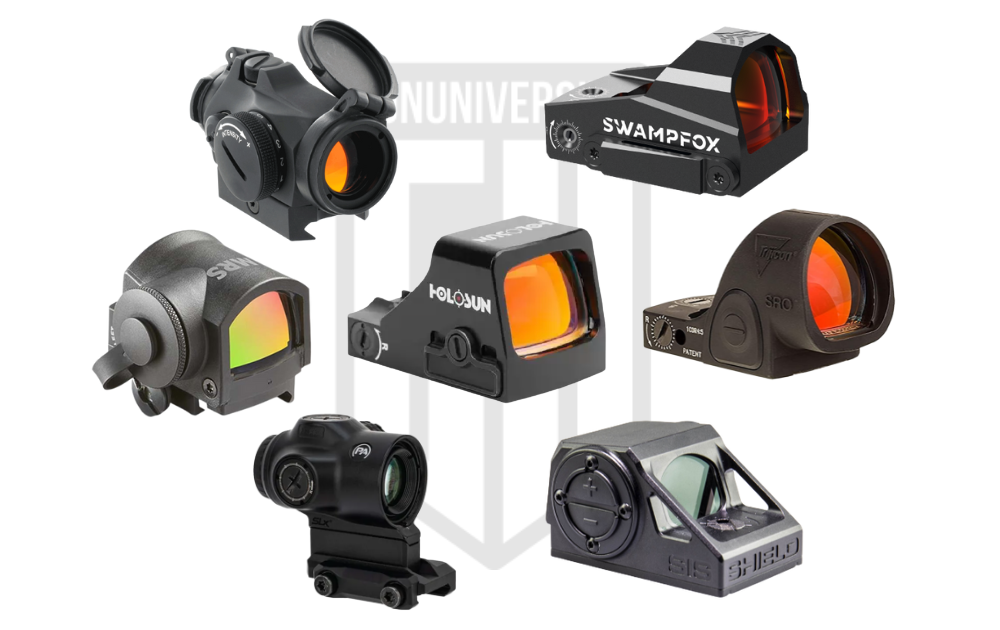
- Holosun 507C
- Aimpoint T2
- Steiner MRS
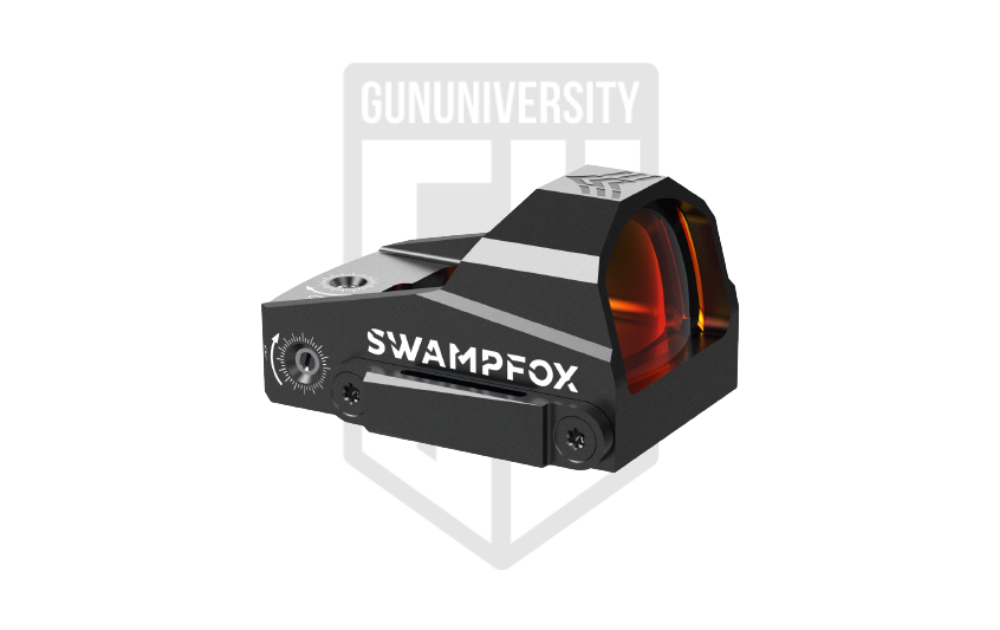
- Swampfox Kingslayer
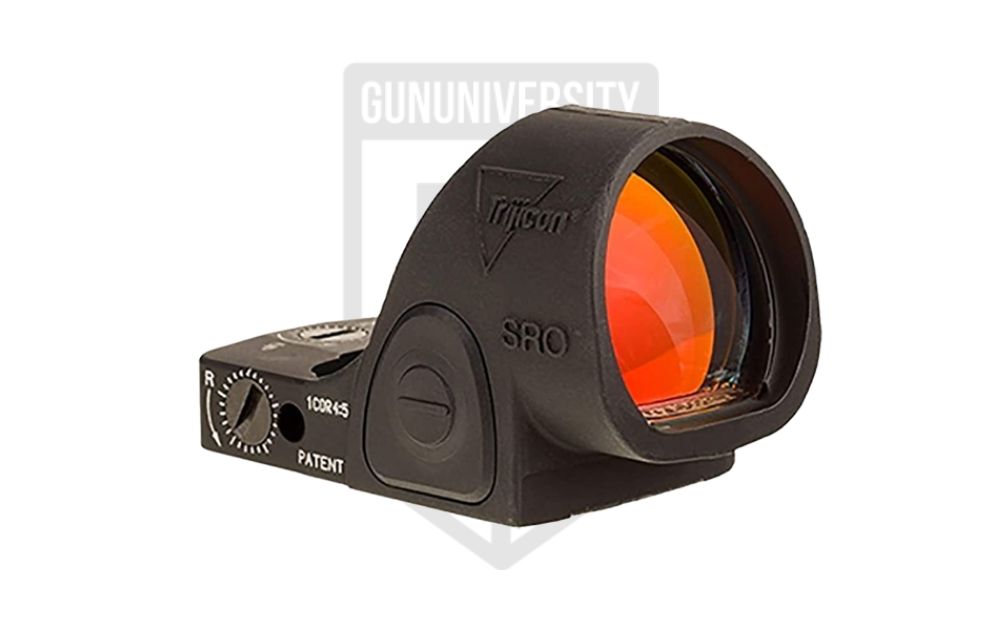
- Trijicon SRO
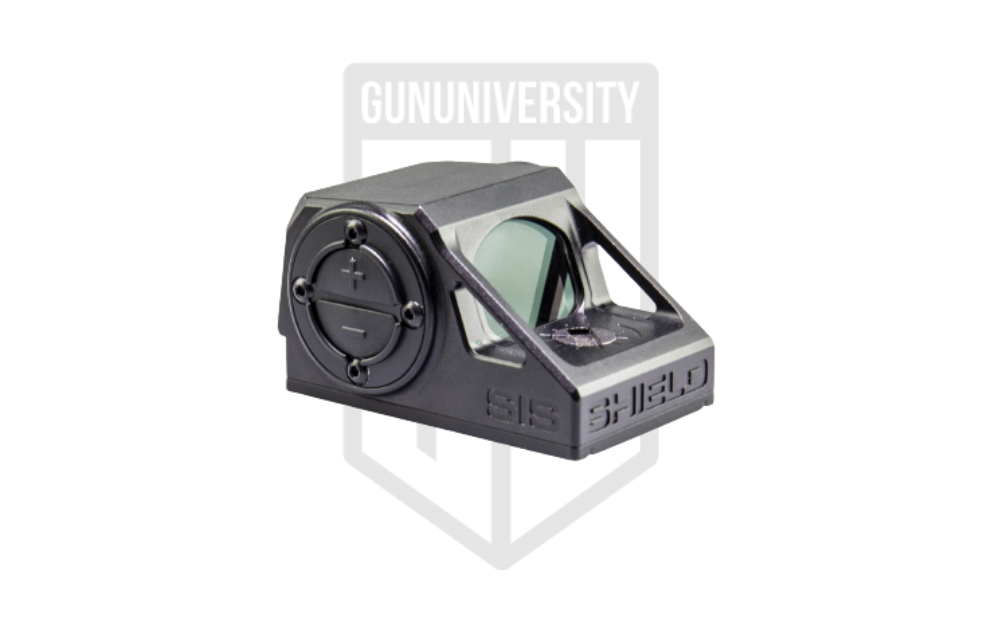
- Shield Sights SIS2
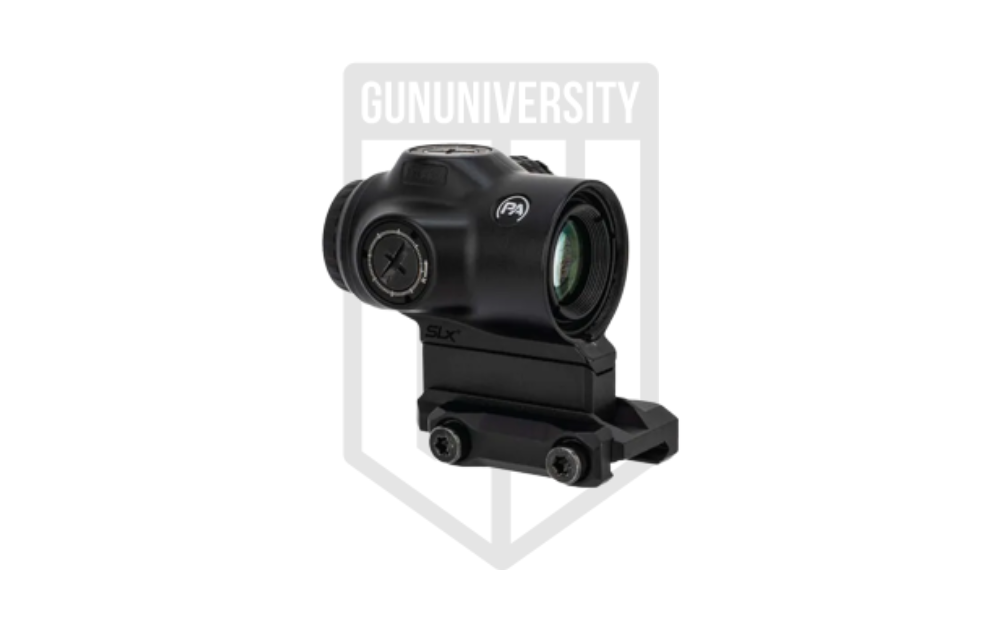
- Primary Arms SLX 1X MicroPrism
Best Red Dot for Shotgun – Reviews
Now we will individually review each red do sight and tell you why we think it is a good option for a shotgun.
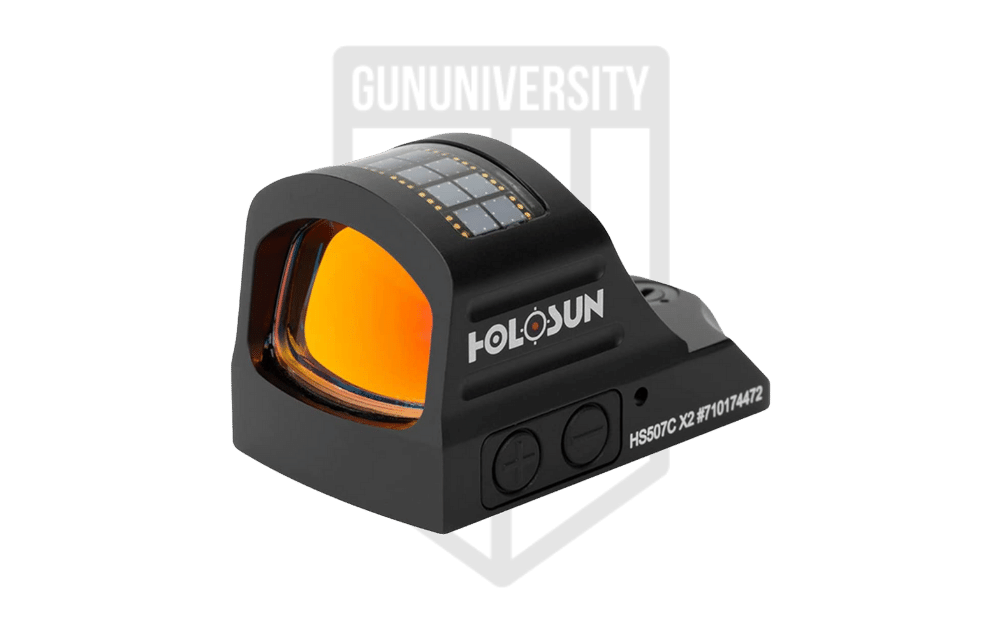
#1 Holosun 507C
Holosun 507C
An open emitter red dot sight available in either red or green with either with a multi reticle system that has 2 MOA dot and a 32 MOA circle.
Holosun 507C Review
Holosun 507C
- Reticle 2 MOA Dot / 32 MOA Circle / Circle and Dot
- Weight (oz) 1.5
- Length (in) 1.78
- Height (in) 1.15
- Width (in) 1.15
- Footprint Trijicon RMR
The Holosun 507C is my top choice for a shotgun red dot. There are tons of good optics out there, but the Holosun 507C continually stands out as if it was designed for a shotgun. The dot is a mini red dot and uses the standard Trijicon RMR footprint. It covers the basics well, but why do I love it on a shotgun? Why do I own more than one and mount them to my favorite shotguns?
The Holosun 507C packs a multi-reticle system. Reticles include 2 MOA dot, a 32 MOA circle, and a combination of dot and circle. I use the 32 MOA circle, and I’ve patterned my chosen load for home defense into that 32 MOA circle. I know my Federal Flitecontrol will pattern inside of that circle at 15 yards and close. This way, I know where every pellet is going when I take a shot. Plus, the windage and elevation adjustments on the 507C are approximately 1 MOA per click, which provides precise control over point-of-impact adjustments.
The Holosun 507C’s reticles are clear, and the circular options tend to be more friendly for shooters with astigmatism. The reticles come in either red or green, and I prefer red for the longer battery life. Beyond the reticles, the Holosun 507C offers a solar backup panel and a side-loading battery that makes powering the optic convenient.
With the 507C, you get an affordable optic as well. It’s mid-tier in its price but top-tier in its performance. The biggest downside I have about the optic is the heavy blue tint that’s present. If that’s the only complaint I can have about it, that’s pretty solid.
The Holosun 507C delivers in a variety of ways. It’s the right size, with the right footprint, and packs a versatile reticle system and multi-pronged approach to powering the optic. Slap it on a Scalarworks Sync mount, and boom, you are good to go. This is an excellent option for shotguns and checks all my boxes for the perfect red dot sight. You can read the full review of the Holosun 507C here.
Holosun 507C Pros and Cons
- Awesome Reticles
- Solar Powered Option
- Trijicon RMR Footprint
- Affordable
- Noticeable Blue Tint
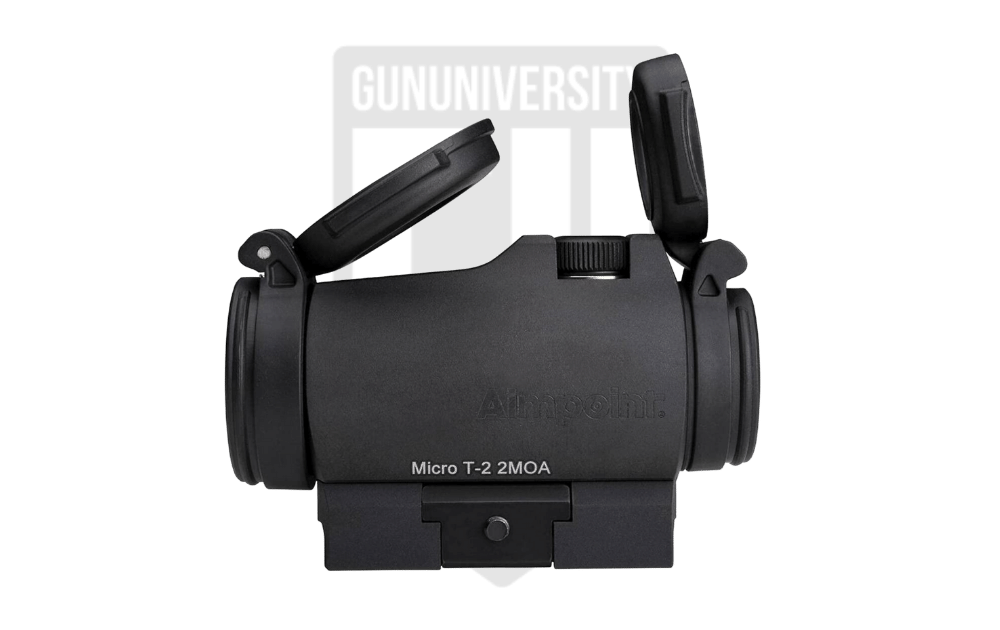
Aimpoint T2 Review
Aimpoint T2
- Reticle 2 MOA Dot
- Weight (oz) 3.3
- Length (in) 3.1
- Height (in) 1.9
- Width (in) 1.6
- Footprint Aimpoint Micro
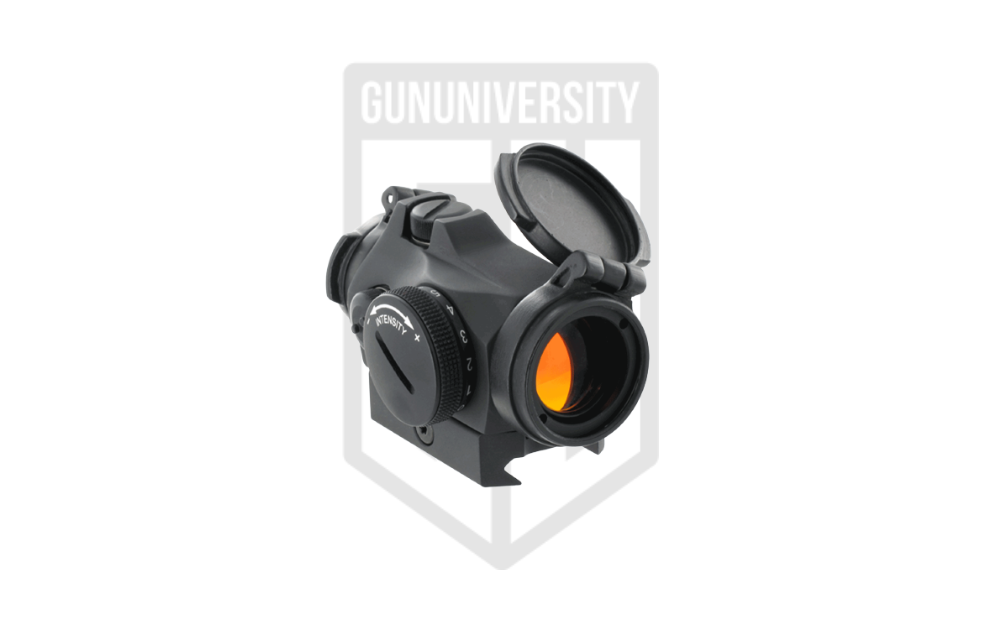
The Aimpoint Micro series is immensely popular on rifles and carbines but has earned a spot on your favorite shotgun as well. The T2 and T1 are the gold standards of red dots worldwide. There are some subtle differences between the two. The T2 is built with several improvements, but if you went with the T1, you’d still strike gold.
The T2 optics are micro Aimpoints that use an enclosed emitter and circular optic shape. They differ from micro red dots but still remain small. The Aimpoint footprint is extremely popular, and finding dedicated shotgun mounts from Aridus, Scalarworks, and more is easy. Shotguns are rough, violent guns with lots of recoils. Weak optics won’t survive on one.
The Aimpoint T2 is no weak optic. It will absorb that rough and violent recoil for thousands and thousands of rounds. It eats it up, and the Aimpoint T2 just won’t tap out. This rugged optic and its enclosed emitter resist water, dust, snow, mud, or whatever else the world tosses at it without failure.
The reticle is a crisp dot, two MOA in size, making it bright and easy to see. The T2 lasts for 50K hours with 1 CR2032 battery. That’s a ton of juice and time from one little battery. The optic is very small and very light. It’s simple, and simple isn’t bad. Shotguns are simple, and the Aimpoint T2 pairs well with a defensive or hunting shotgun.
My main complaint and why it takes second instead of first on this list, would be the small reticle. While it’s fine on a rifle, I would love to see a four or six MOA reticle option for shotgunners. Other than that, this is one of the best red dots on the market, period. It’s the choice of numerous Special Operations units for a reason. Aimpoint gave us the modern red dot and continues to innovate and produce versatile options for all weapons.
Aimpoint T2 Pros and Cons
- Ultra Well Made
- Super Clear
- Tons of Mounts available
- Expensive
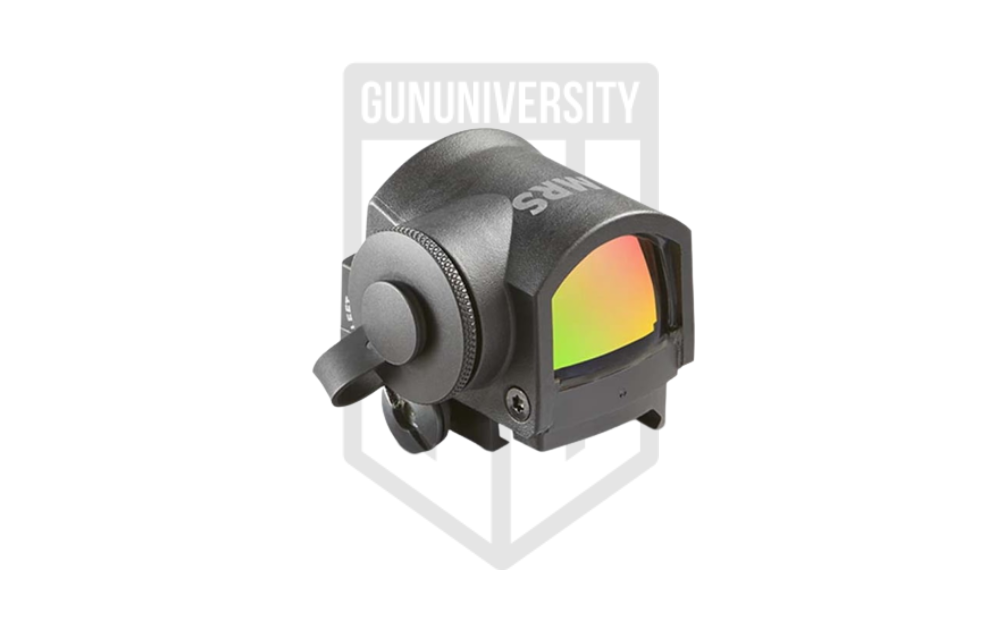
Steiner MRS Review
Steiner MRS
- Reticle 3 MOA Dot
- Weight (oz) 2.5
- Length (in) 1.89
- Height (in) 1.9
- Width (in) 1.8
- Footprint Docter/Noblex
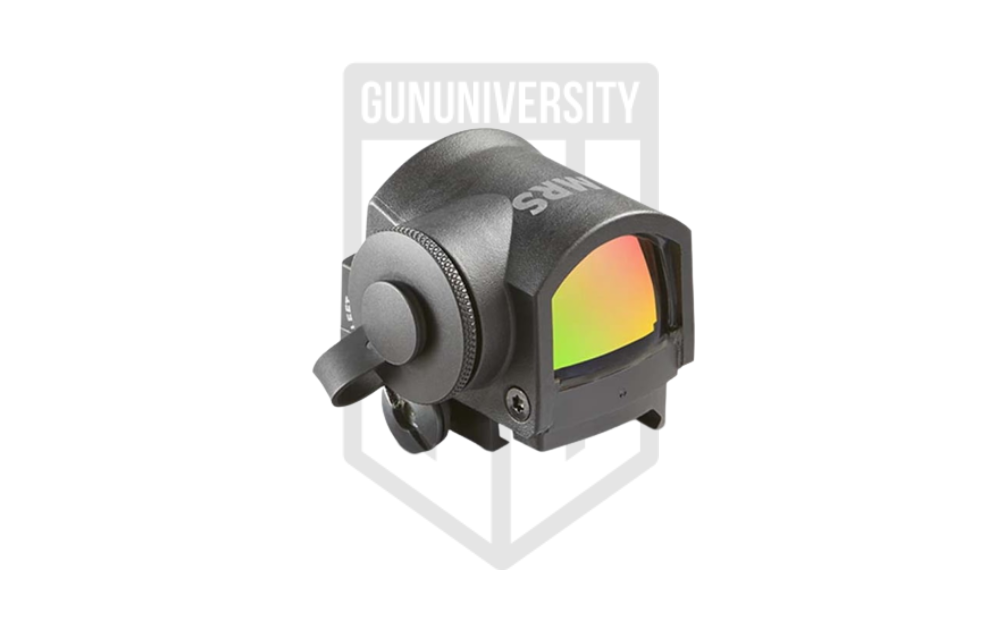
The Steiner MRS occupies an odd spot in the world of optics. It’s small enough to be a pistol-sized red dot in most dimensions, but it’s made for long guns. The Steiner MRS comes with an integral Picatinny mount to make tossing it on your shotgun easy. The Steiner MRS places the battery on the right side for easy swapping out the battery without needing to dismount.
The Steiner MRS doesn’t require a special mount and still sits ultra-low. The side-mounted battery really allows it to sit low without the need for a specialized mount. If you don’t like the Picatinny rail, the MRS uses a Docter/Noblex mounting plate, so different mounting solutions exist.
The little optic weighs only 2.5 ounces and is 1.89 inches long. At the same time, it has an enclosed emitter to keep the gun running regardless of the weather. The MRS is completely water-tight and well suited for the duck or goose hunter who goes hard.
Shooters get a three MOA red dot reticle that is ultra crisp and easy to see. The view through the lens is remarkably clear and delivers a great view through the lens. The Steiner MRS is a high-end red dot, but the price isn’t terrible. It’s not a budget-friendly optic, but it is still fairly affordable.
My main complaint is the brightness control and its size and why it takes 3rd on the list of best red dots for shotguns. It’s one button, and you move from auto brightness adjustment to the max, then medium, and then low. Sadly you have to cycle through each to find the right setting and can’t go up and down manually.
This is a solid optic for hunters, home defenders, and tactical duty users. It’s a well-built optic from a company that’s often underrated. So, its definitely not a bad choice.
Steiner MRS Pros and Cons
- Enclosed Emitter
- Sits Very Low
- Tough and Durable
- Bottom Mounted One Button Brightness Controls
Swampfox Kingslayer Pro Review (Budget Option)
Swampfox Kingslayer
- Reticle 3 MOA Dot / 65 MOA Circle and 3 MOA Dot
- Weight (oz) 1
- Length (in) 1.8
- Height (in) 1
- Width (in) 1
- Footprint Trijicon RMR
So far, the optics I’ve suggested have been fairly expensive. The Swampfox Kingslayer, on the other hand, offers you a shotgun red dot at a fairly low price. The Kingslayer costs less than 200 dollars and offers you a number of features that make it a great shotgun red dot. It does use the famed RMR mount, so finding various shotgun mounts and rail adapters is easy.
The Kinglsyaer comes in various models with different reticles. There is a standard dot and a circle and dot combo. For shotguns, the big circle and dot make a ton of sense. This reticle is a 3 MOA dot and 65 MOA ring. Shooters can pattern various loads inside the 65 MOA ring and know where their load of buckshot lands within that circle. This makes it easy to account for pellets, and with the big 65 MOA circle, you aren’t restricted to expensive Flitecontrol rounds.
The Kingslayer is an affordable optic, but it’s still built to be convenient. The battery is side-loading, so there is no need to remove it to swap power. The optic can withstand 800 g of recoil, so it won’t fall apart on your shotgun. The Kingslayer offers two button controls and ten brightness adjustments. All this, and it weighs only 1 ounce.
The Kingslayer isn’t going to be the best option for duty use. If you are a police officer, security agent, or anyone who gun slings for a living, then the Kingslayer might not fit your rough and tumble lifestyle. For home defenders and hunters, it will more than check your boxes. If you ended a budget option, then the Swampfox Kingslayer is here for you.
Swampfox Kingslayer Pros and Cons
- Affordable
- Good Shotgun Reticle
- Trijicon RMR Design
- Not Duty Durable
Trijicon SRO Review
Trijicon SRO
- Reticle 5 MOA Dot
- Weight (oz) 1.6
- Length (in) 2.2
- Height (in) 1.4
- Width (in) 1.3
- Footprint Trijicon RMR
The Trijicon RMR changed the world. Trijicon created the first true micro red dot, but if I had to pick one Trijicon for shotguns, it would be the SRO. The SRO is a micro red dot that sticks to the RMR-style mount. The Trijicon SRO makes a number of improvements to the RMR style design but isn’t a replacement, merely a secondary option. In my opinion, the SRO fits better on long guns.
The Trijicon SRO’s biggest departure from the RMR is the fact they went with a round window over a square window. One of the claims is that the circular window makes it easier to acquire the dot. The difference is small but noticeable, and you can very easily find that dot and get it on target naturally and quickly. The SRO comes with either a 2.5 MAO dot or a 5 MOA dot, and I think the 5 MOA dot is most certainly the way to go.
Trijicon makes some of the world’s toughest optics. There is a reason that the RMR sits on so many military weapons. The SRO is no different. It’s an optic made to work and work well for a long period of time. It will eat up the recoil a shotgun tosses at it and never give you any lip.
The SRO features a top loading battery which is much more convenient than the RMR’s bottom loading design. The user has two massive buttons for brightness adjustments. The downsides are very small, and some may point to the price, but I don’t see that. I see an optic worth the investment.
This is a great option for a minimalist red dot for those looking for a police and military-worthy red dot. Home defenders and hunters certainly won’t complain about its toughness, either. The SRO isn’t a replacement for the RMR but an advancement of it.
Trijicon SRO Pros and Cons
- Super Durable
- Crisp Red Dot
- Awesome Circular Window
- Expensive
Shield Sights SIS2 Review
Shield Sights SIS2
- Reticle 4 Various
- Weight (oz) 2.25
- Length (in) 2
- Height (in) 1.4
- Width (in) 1.5
- Footprint Picatinny Mount
Shield Sights is painfully underappreciated. They created the first micro-sized footprint to allow small guns to wear red dots. This small British firm also produces an awesome shotgun red dot in the form of the SIS2. SIS2 stands for Switchable Interface Sight 2.0. The name comes for the shooter’s ability to swap between four different reticle options. Three of these reticles can be used for shotguns rather well.
The four reticles include a 1 MOA dot but also an 8 MOA dot, a 1 MOA dot with a 65 MOA ring, and an 8 MOA dot with a 65 MOA ring. Personally, the 1 MOA dot with ring sounds perfect for shotguns, but the 8 MOA options are also viable, depending on your preferences. This must be the third time I’ve suggested a reticle with some form of ring. Being able to pattern your load inside that circle can be quite nice.
The SIS2 uses a Picatinny rail mount and comes with three heights. On most shotguns, the low mounts work well. If you are using an AR or bullpup-type shotgun, you’ll likely want a higher mount, and that is offered here. The SIS2 has two big buttons to allow for easy brightness control, with settings low enough for night vision and settings high enough to deal with bright sunlight conditions.
The SIS2 is built like a tank and is designed for duty use. This isn’t a weak little sight, and it’s not a budget-friendly one either. The big downside is the bottom loading battery. You have to remove the optic to swap batteries, and that’s annoying. Other than that, those Brits are making solid red dots, and they deserve more attention.
Shield Sights SIS2 Pros and Cons
- Multiple Reticles
- Huge Controls
- Enclosed Emitter
- Bottom Loading Battery
Primary Arms SLX 1X MicroPrism Review
Primary Arms SLX 1X MicroPrism
- Reticle Cyclops Gen 2 Reticle
- Weight (oz) 5.5
- Length (in) 2.48
- Height (in) Variable
- Width (in) N/A
- Footprint Picatinny Mount
For the last pick for shotgun red dots, I’m going wildcard. In fact, this isn’t even technically a red dot, but a 1X prism sight. The Primary Arms SLX 1X MicroPrism is an interesting option for shotguns. Since the optic is a prism, it’s an etched reticle, and etched reticles allow shooters with astigmatism to see the reticle clearly and easily. The reticle is illuminated and easy to see in all lighting conditions.
The stock standard mount is high, but numerous mounts exist to lower the mount to make it more appropriate for a shotgun. The optic is somewhat large, and it’s a little bigger than the Aimpoint T-1, but not crazy big. The reticle is the ACSS Cyclops design, and Primary Arms designed the reticle to be compliant with numerous weapons, including shotguns.
The center chevron can be zeroed for shotgun slugs and be used for calculating drop out to 100 yards with a 25-yard zero. Around that reticle sits a big circle, and as I’ve said numerous times now, you can use that circle to pattern your shotgun’s buckshot loads. It’s set up to be quite versatile and well-suited for shotgun hunting and home defense.
The prism design also ensures you always have a not-so-complex reticle. Even if the battery dies or electronics break, the etched reticle is always present. That battery will last 45,000 hours on the medium setting, so you don’t have to turn it off by any means. The optic uses a motion-sensing automatic on and off design to preserve the battery.
The big downside ties back to the prism design. There is an eyebox and required eye relief. They might be generous in both regards but are still present and can be a slight bit slower than a red dot. If you have astigmatism or want something a little different than a red dot, then the Primary Arms Microprism is perfect for you.
Primary Arms SLX 1X MicroPrism Pros and Cons
- Etched Reticle
- Ballistically Compatible With Shotguns
- Long Battery Life
- Eyebox and eye relief present
Best Red Dot for Shotgun – Buyers Guide
Alright, I’ve given you the red dots I personally trust right now. But I don’t want this to just be a “copy what Travis bought” situation. Shotguns are a little weird compared to rifles, and what works great on one setup can feel completely wrong on another. So let me walk you through how I think about choosing a red dot for a shotgun.
A good dot can absolutely level up your shotgun. But the shotgun platform doesn’t always play nice with optics, so you’ve got to be intentional.
Factors To Consider When Buying a Red Dot Sight for Shotgun
Size considerations:
If you noticed a pattern in my picks, it’s that most of them are on the smaller side. That’s not an accident.
Full-sized red dots are usually built with AR-type rifles in mind. Slap one of those big housings on a traditional shotgun and you’ll probably notice it sits too high to get a solid cheek weld. And once your cheek weld is off, everything feels awkward. You’re hunting for the dot instead of naturally picking it up.
Big optics can also just get in the way. I’m a big believer in being able to port load when needed. If you like going over the top of the gun to drop a round straight into the chamber, a large optic can absolutely interfere with that. Same thing if you’re running a side saddle. A bulky optic can make grabbing a brass-up round feel clumsy.
And here’s the thing: shotguns are typically close-range tools. You’re not stretching this thing out to 400 yards. The added bulk of a giant optic doesn’t really buy you much in most shotgun roles. Smaller dots keep the gun lighter, cleaner, and easier to manipulate.
Now, if you really want to run a full-sized dot, that’s fine. Just make sure your loading techniques and manipulations still work smoothly with it mounted. Don’t assume it will.
Mounting Height:
This one trips people up all the time.
Most traditional shotguns like the Mossberg 500, Remington 870, Benelli M4, Beretta 1301, and others have stocks that sit fairly low. They were never designed around optics. So if you mount your dot too high, you’re lifting your head off the stock and breaking that natural cheek weld.
On a shotgun, you usually want the dot as low as possible. Shotguns are close-quarters tools. You don’t need extra height over bore to complicate things. The lower you can mount it while still seeing the dot clearly, the better.
If you’re running bead sights, you don’t need to stress about co-witness. If you’ve got ghost rings or rifle sights, those are often close to the height you’ll want for your dot anyway, so keep that in mind.
Now, AR-style shotguns and some of the newer bullpup designs from KelTec, Smith & Wesson, IWI, and others are a different story. Those have inline stocks, so you’ll need a slightly higher mount just to see the optic. In those cases, absolute co-witness height is usually about as low as you can reasonably go.
It all depends on the platform.
Mounting Options:
If you’re running one of those inline, AR-style shotguns, life is easy. Use a standard AR-height mount and call it a day.
Traditional shotguns are where it gets more interesting. The most common route is a Picatinny rail with a low Pic mount. That works. I’ve run that setup plenty of times. It does sit a bit higher than I’d ideally like, but it’s workable.
That said, there are some lower-profile mounting options for popular shotguns that get the optic down closer to the receiver. I’ve found three in particular that really impressed me and keep the dot LOW without making the setup awkward.
Best Shotgun Red Dot Mounts
Aridus Industries CROM Mount |  | See Price |
Scalarworks SYNC Mount |  | See Price |
KE Arms Shotgun Mount | 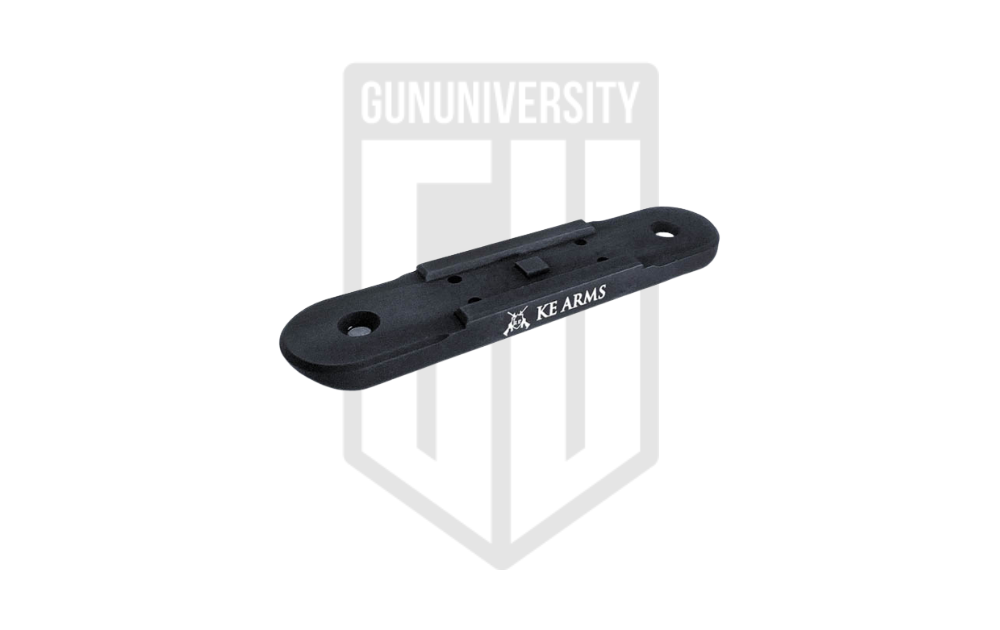 | See Price |
These aren’t the only mounts that work, but they’re the ones I personally keep coming back to. They’re also from American companies that actually take shotgun shooters seriously and build quality gear for the platform. That matters to me.
Reticle Design:
At the end of the day, a simple red dot works. A bright, crisp dot is the baseline. If you’ve got that, you’re in business.
But shotguns have some unique advantages when it comes to reticles. I’ve grown to really like larger reticles on a shotgun. A bigger dot, or better yet a ring-and-dot setup, is faster to pick up and easier to track through recoil. And shotguns recoil. No way around that.
With a ring reticle, especially when running buckshot, you can actually use it as a reference when you pattern your gun. As you test your chosen load at different distances, you’ll see how your pellets spread in relation to that circle.
For example, I know that inside my home, with my shotgun and my chosen defensive load, my pellets won’t escape that circle at the longest realistic distance I’d ever shoot indoors. That gives me confidence and accountability for every pellet. I’m not guessing.
Is a fancy reticle mandatory? No. But if you have the option, it’s worth considering.
Minimum requirement? It needs to be bright and easy to see in all lighting conditions. If it can’t handle bright daylight, it’s not staying on my gun.
Strength and Durability:
This is where a lot of people mess up.
Shotguns are violent. The recoil impulse is sharp, and it will shake cheap optics apart. I’ve seen it happen. If you try to save money by going with a bargain-bin red dot that was really meant for an airsoft gun, a shotgun will expose that pretty quickly.
I stick with known companies that have a track record. Aluminum housings. Solid construction. Real IP ratings. Brands like Aimpoint, Trijicon, and others that have proven themselves.
If this shotgun is for duty use, home defense, or hunting, this is not the place to gamble.
Loc-Tite It / Witness Marks:
Last thing, and this is just hard-earned advice.
After you mount your optic, use Loc-Tite on the screws. Shotguns will loosen things up. It’s just what they do. I also recommend adding a witness mark on your mounting screws or rail clamp. That way, if something starts to back out, you’ll see it immediately.
I’ve seen accessories slowly walk themselves loose under recoil. Optics aren’t immune. Lock it down properly, mark it, and check it periodically.
It’s not exciting advice, but it’ll save you frustration later.
Going Forward
After running shotguns with and without red dots, I’m not going back. A red dot on a shotgun just works. It’s faster. It’s easier to track. And for most shooters, it makes hits more consistent, especially once you start pushing speed.
But here’s the catch — the shotgun will expose bad gear quickly. If you mount a weak optic on a hard-recoiling 12 gauge, you’ll find out sooner or later. Usually at the worst time.
That’s why I keep hammering on durability and mounting height. The wrong optic sits awkwardly. The wrong mount ruins your cheek weld. And a cheap dot will eventually start flickering, shifting zero, or just give up entirely.
A shotgun rewards people who actually think about their setup. Pattern your gun. Test your load. Mount your optic correctly. Lock it down. Then run it enough to know it’s solid.
If you do that, a red dot-equipped shotgun is a very capable setup.
And if you’ve got questions or want to compare notes, drop them below. I’m always interested in hearing what other people are running.
Best Red Dot for Shotgun – FAQs
Absolutely. I’ve run red dots for hunting, and once you get used to it, it’s hard to go back. Being able to pick up the dot quickly on a moving target just makes life easier. Whether it’s birds, small game, or even larger animals at closer ranges, a red dot speeds things up without overcomplicating your sight picture. Just make sure it’s bright enough for daylight and tough enough to handle recoil. Hunting isn’t the place to find out your optic can’t keep up.
First thing I always do is make sure the optic is mounted solid and not shifting at all. If it’s loose, you’re wasting ammo. Once it’s locked down, I’ll usually start around 25 yards for most shotgun setups. From there, adjust windage and elevation per the manufacturer’s instructions until your point of impact matches your point of aim. With buckshot, I also pattern the gun at different distances so I know exactly what it’s doing. With slugs, you can treat it more like a rifle and fine-tune it a bit tighter. Take your time. A shotgun setup deserves a proper zero.
Most of the dots I’ve run use CR2032 coin cell batteries. They’re common, easy to find, and usually last a long time. I always keep a spare or two around just in case. Some newer optics use solar assist or motion-activation features to stretch battery life, which is nice. But regardless of what system it uses, I recommend changing the battery on a schedule if this is a defensive or hunting shotgun. Don’t wait for it to die on you.
It depends entirely on your shotgun and mount setup. Some mounts will let you co-witness with ghost ring or rifle sights. Others won’t. On a lot of traditional shotguns, co-witnessing isn’t really necessary. You’re typically working at closer ranges, and the red dot becomes your primary sighting system. If it’s mounted low and properly zeroed, you’re good to go. That said, if your setup allows co-witness and you prefer it, there’s nothing wrong with that. Just make sure your mounting height still gives you a solid cheek weld. That matters more than forcing a co-witness just because you can.
About Travis Pike

Travis Pike is a former Marine Machine Gunner and a lifelong firearms enthusiast. Now that his days of working a 240B like Charlie Parker on the sax are over, he's a regular guy who likes to shoot, write, and find ways to combine the two. He is a "simplicisist" when it comes to talking about himself in the 3rd person and a self-professed tactical hipster. Hit him up on Instagram with story ideas.
Recent Posts

March 7, 2026
March 7, 2026

March 7, 2026